Same species, similar age, the same decay in the trunk. One tree was heavily reduced years ago, the other only ever carefully thinned. What's left of each today explains better than any theory why "gentle" isn't always gentle.
Both trees came with the same problem: fruiting bodies of the shaggy bracket on the main stems, partly up into the crown – a fungus that causes fast, intensive white rot. Its fruiting bodies are annual; they appear in summer, decompose over winter and are often barely findable the following year, while the fungus keeps working in the wood. Both crowns were large, heavy and wide-spreading – one of the trees almost 20 metres across. The question was the same in both cases: how does the tree stay standing without coming apart?
This tree was heavily reduced about five years ago by another company and then left to itself. When I took it over, tufts of vigorous new shoots stood at every cut. Instead of removing them, I thinned them: two to three strong shoots left per topping point, the rest removed, the remaining ones cut back to laterals.
The result five years after the topping: the old cuts – giant wounds that on a normally pruned tree would stand open for many years even at the branch collar – have been completely closed over by the new shoots. Precisely the stimulus the big wounds trigger drives the massive regrowth that then closes them again; that's the combination that can work out with this species, if you guide it right. The two or three remaining shoots per limb I additionally shortened back to laterals, so more weight comes out and the tree keeps settling down. Without the old load, the trunk has started to thicken again on the outside. The tree bears nuts and stands safe.
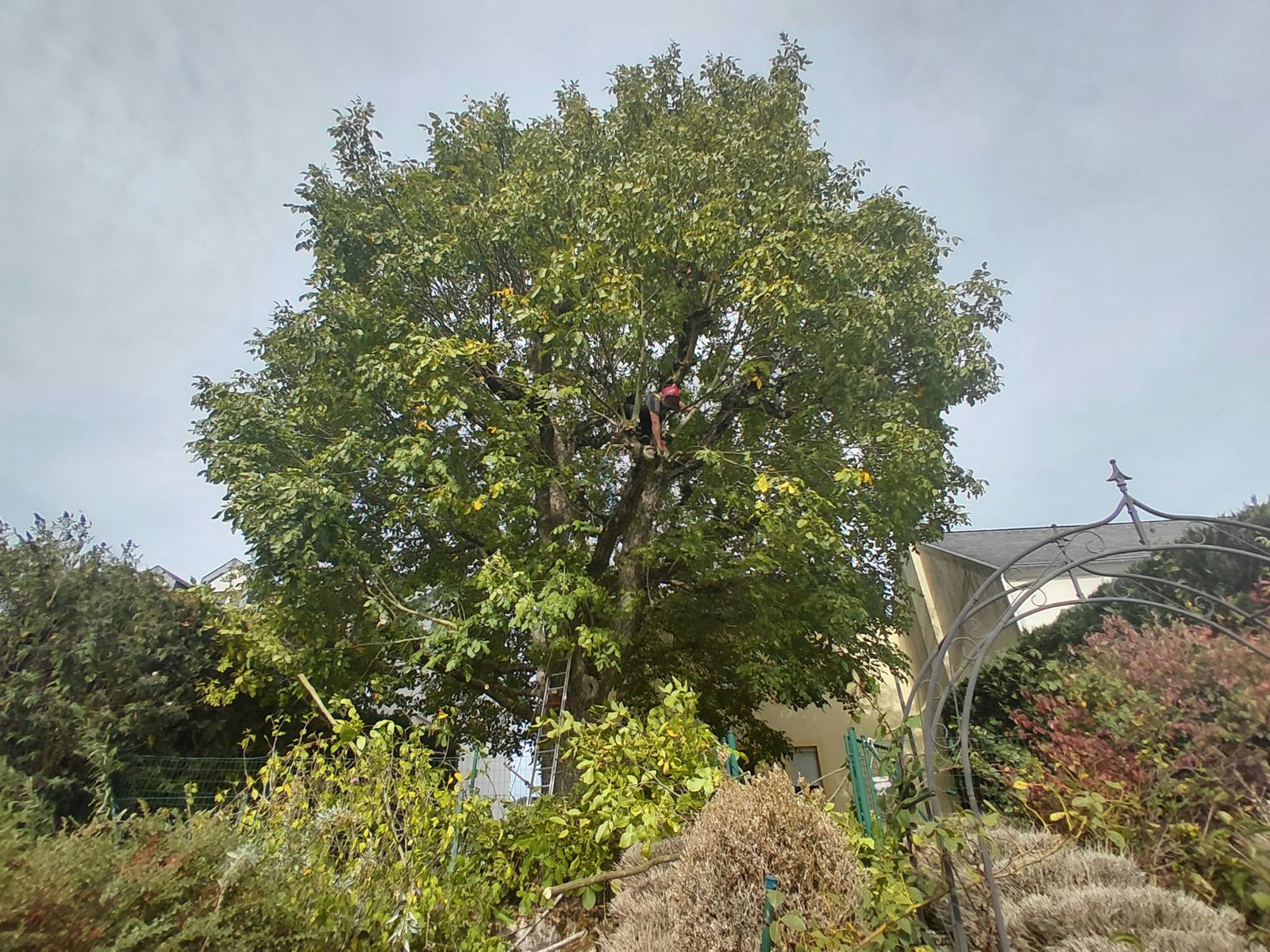
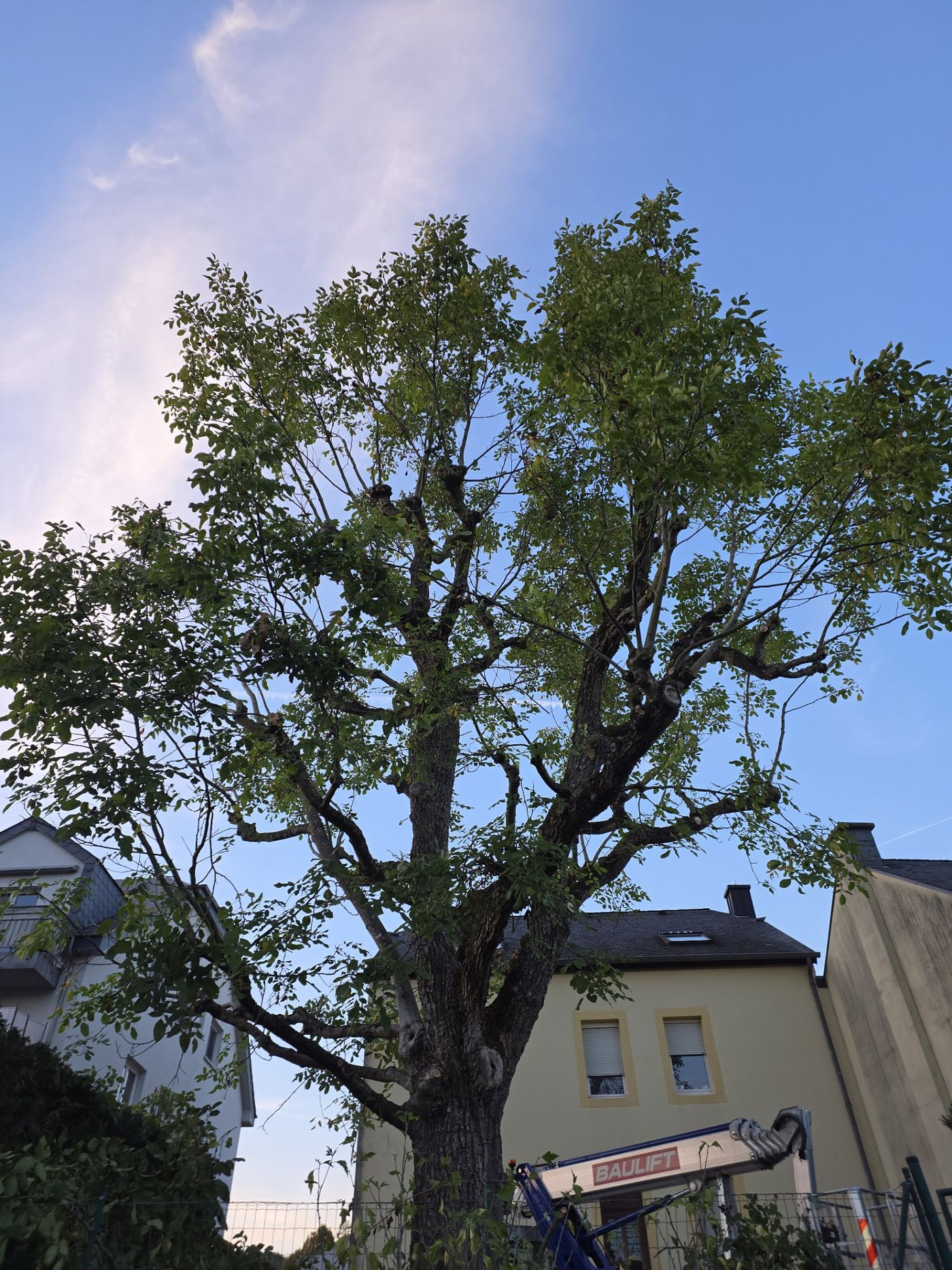
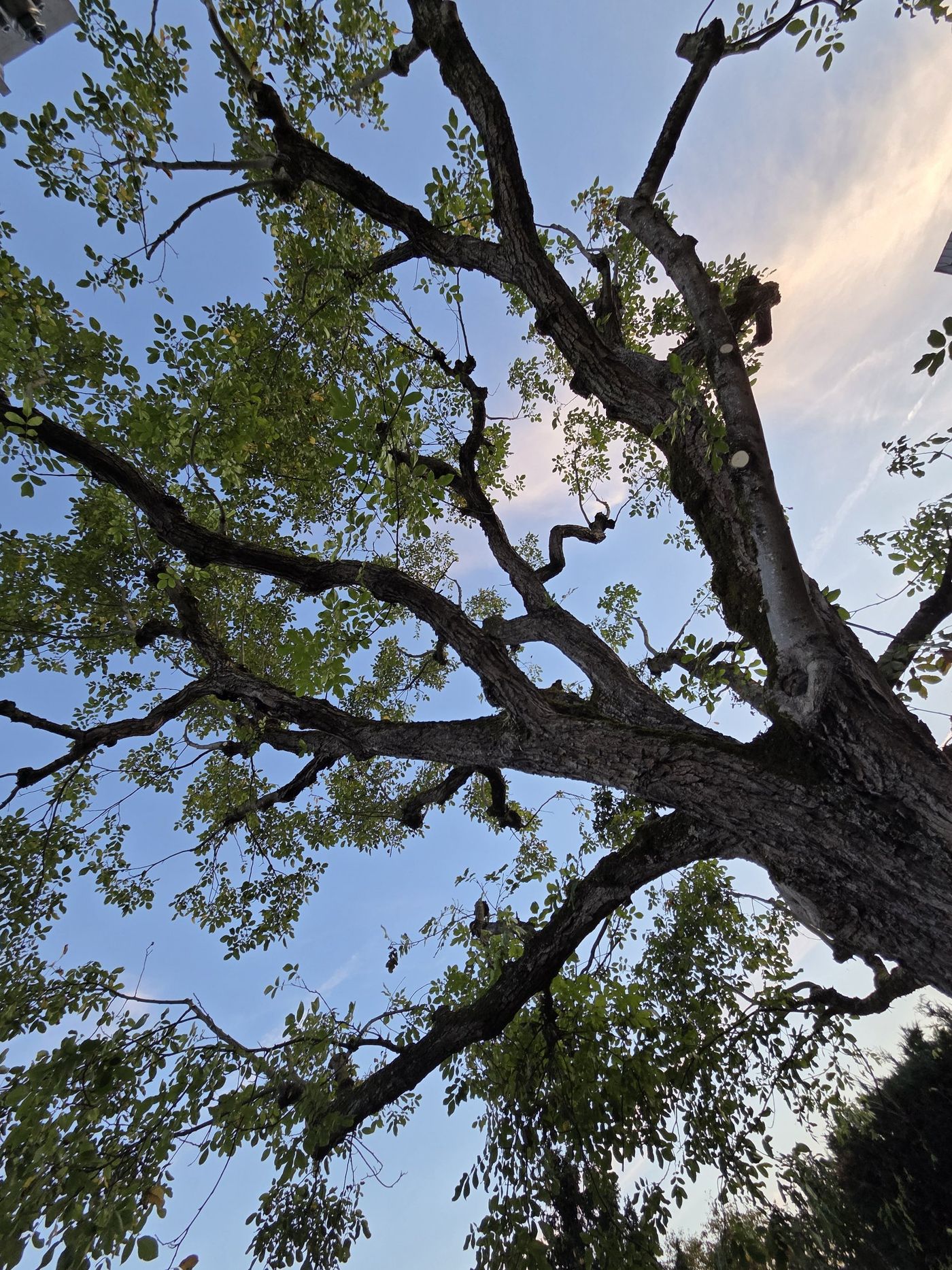
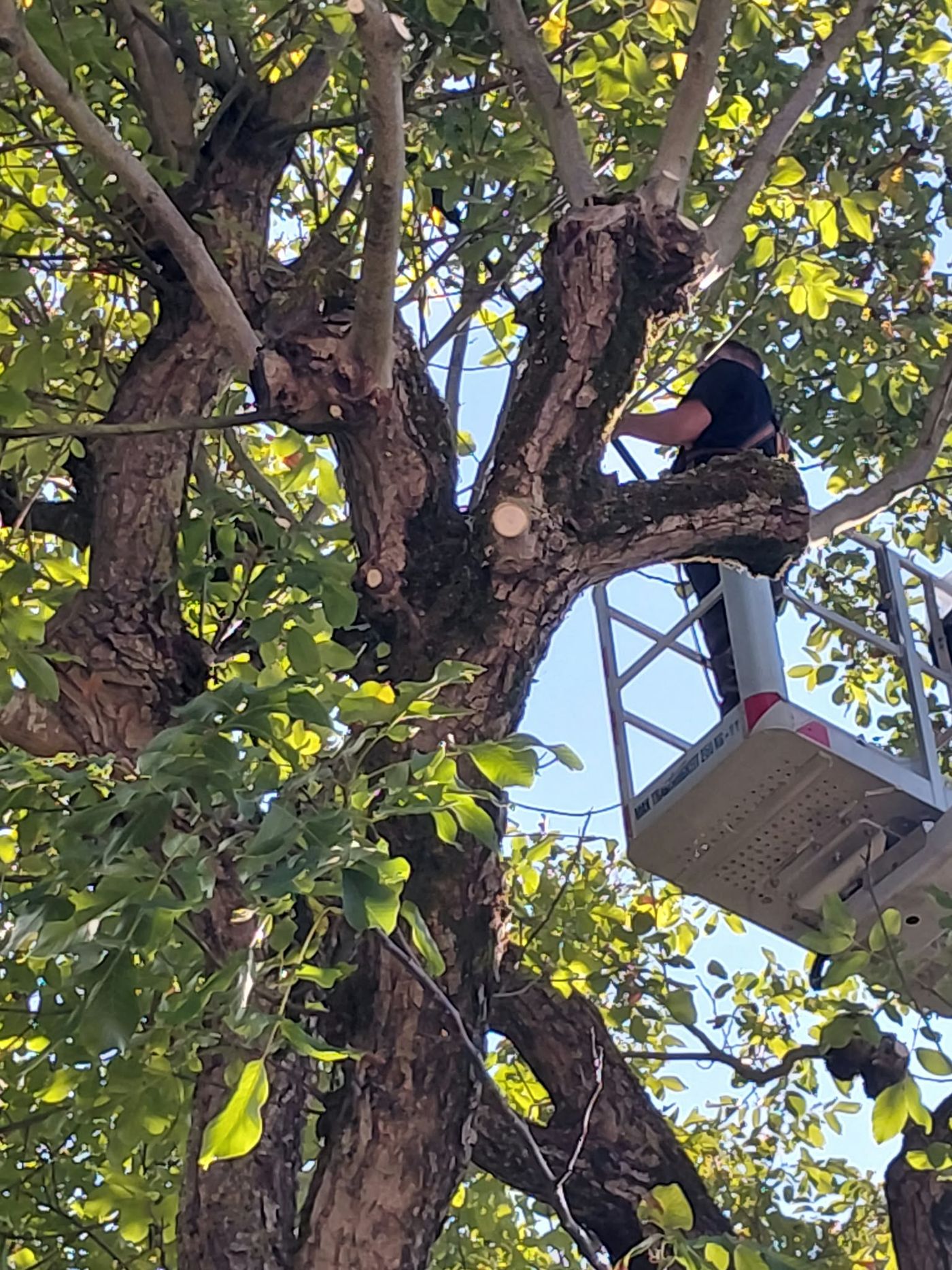
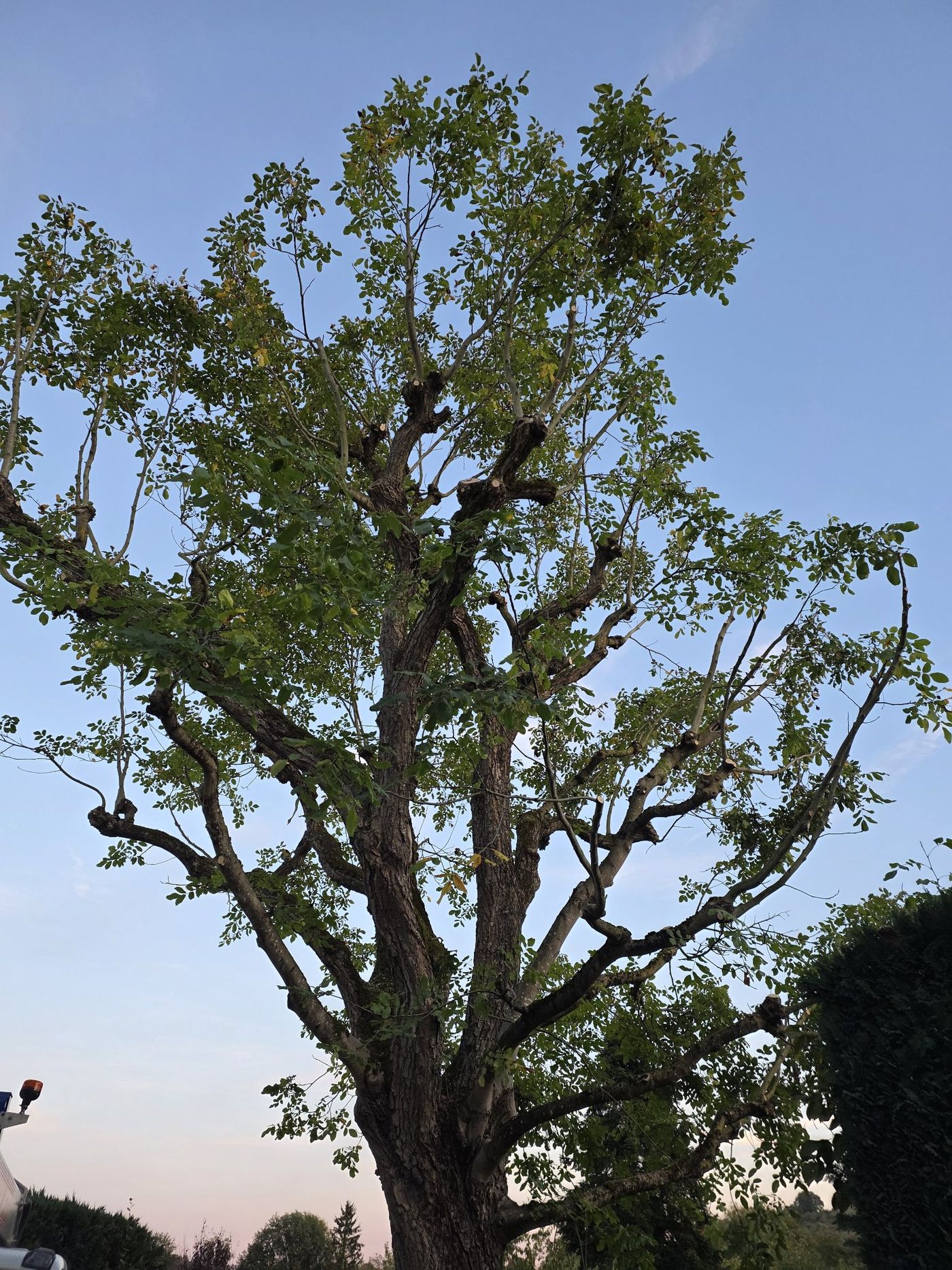
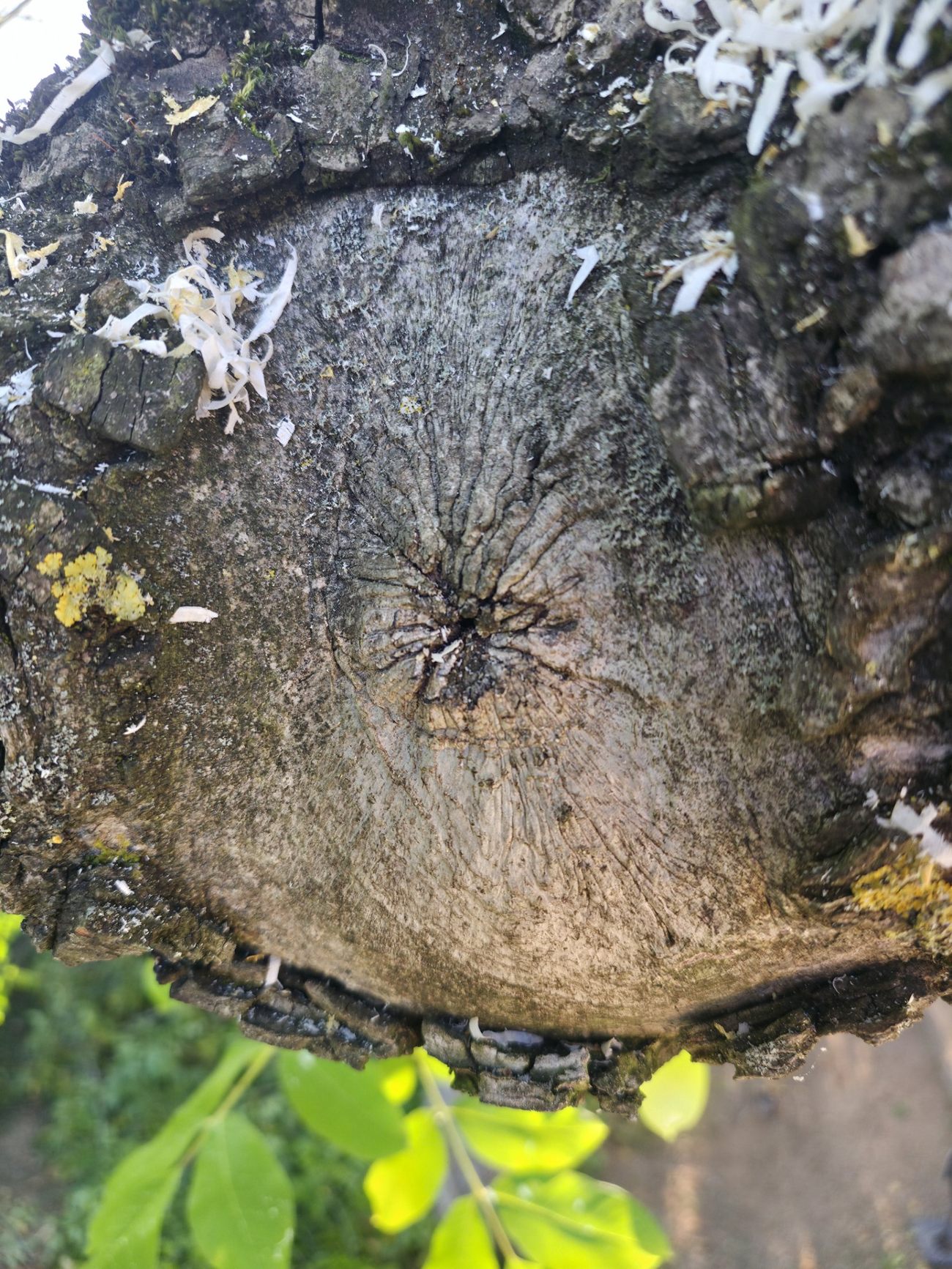
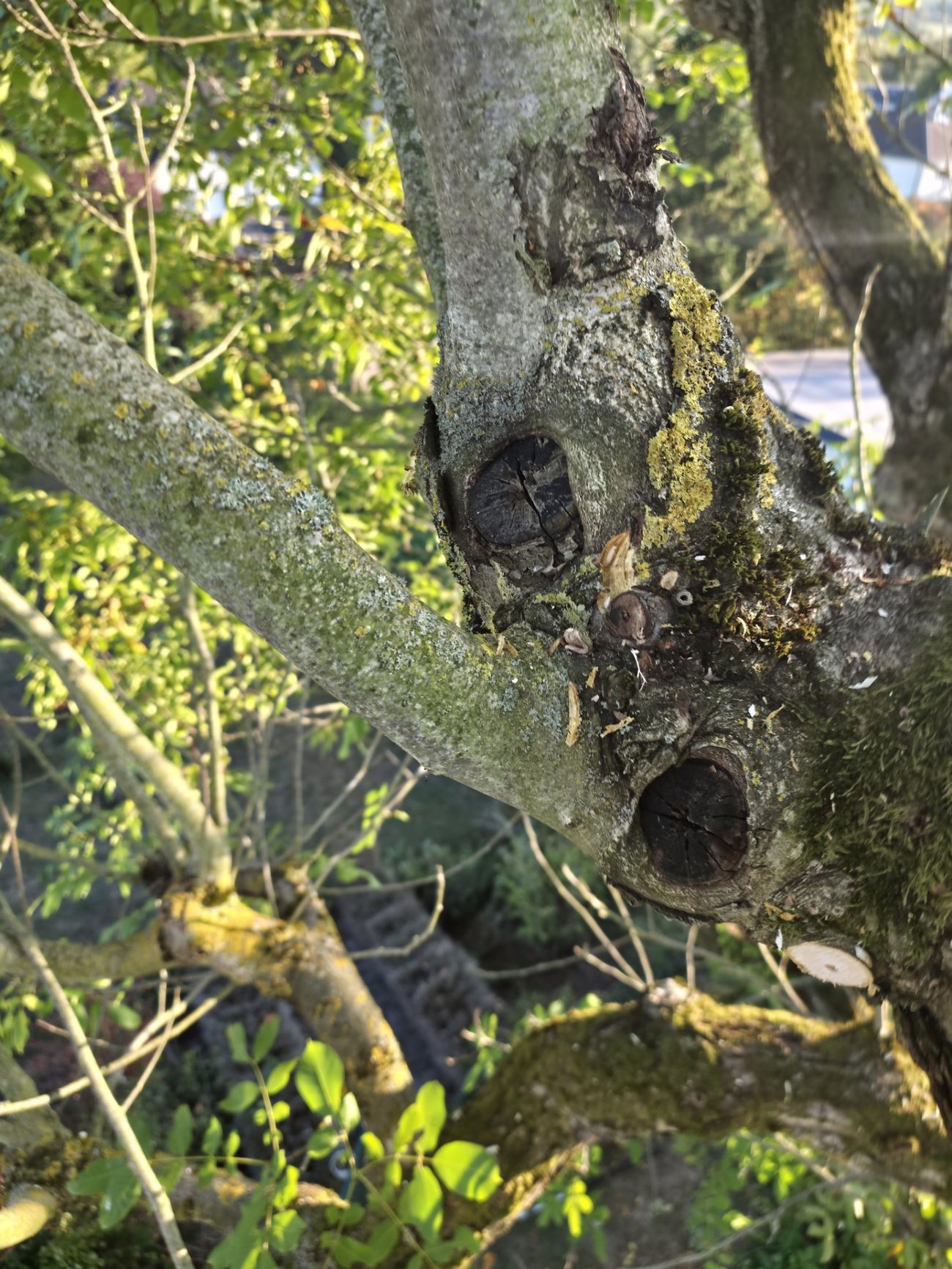
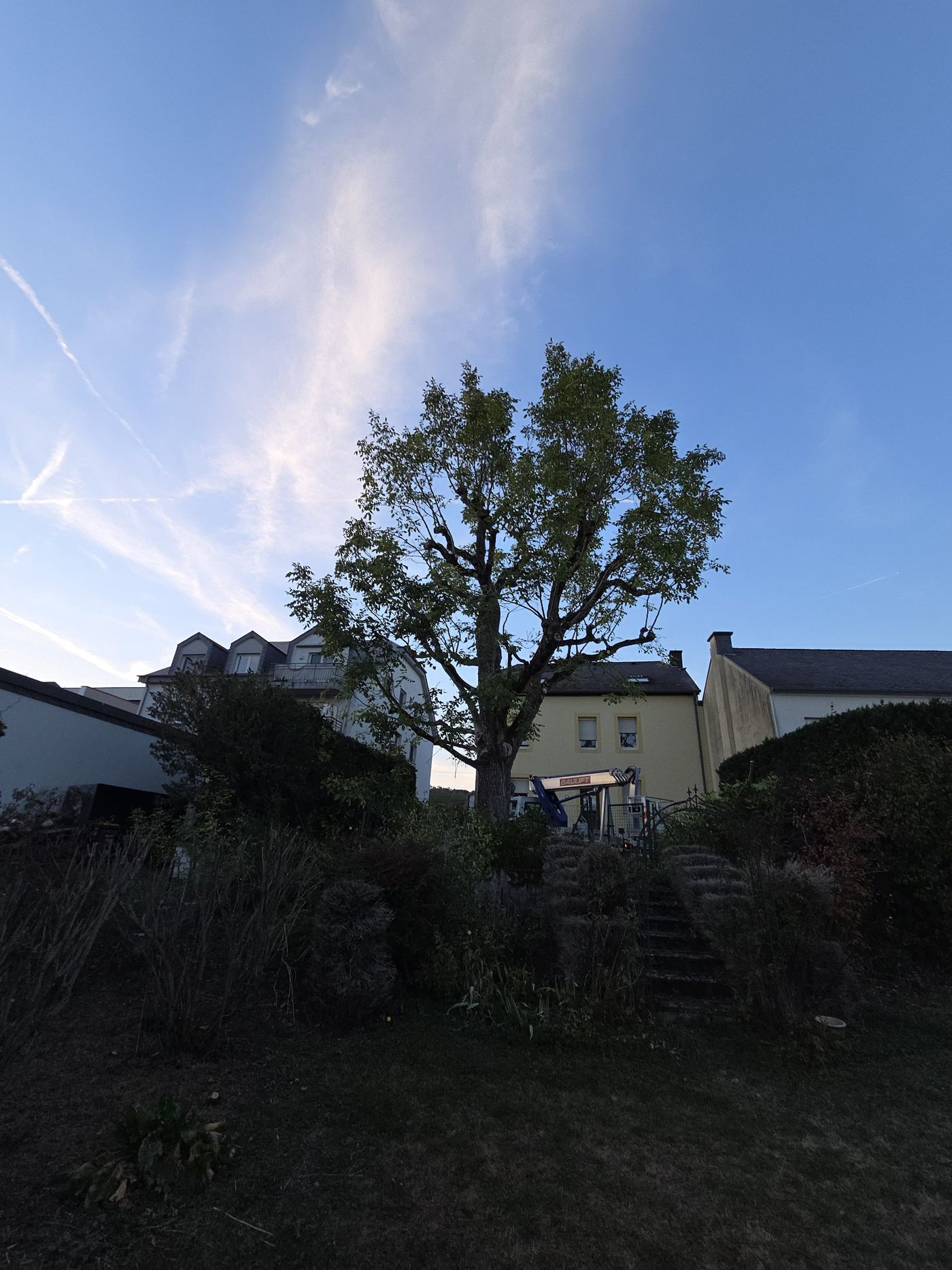
Photos: takeover, thinning and result.
This tree I treated for years by the principle found in every textbook: don't cut into thick branches, keep wounds small, do the tree no harm. Deadwood out, a branch here and there, nothing more. The fungus's fruiting bodies grew fewer over the years – which is easy to read as improvement.
Today the probe shows what that really means: 50 centimetres of steel disappear into the trunk up to the handle. The tree is almost completely hollow, one stem has already broken out, the fungal mycelium sits in the cut faces. And the crown still hangs up there with full weight and full leverage – every year new branches break out. That the fungus hardly fruits any more doesn't mean it's gone. It has used up its wood.
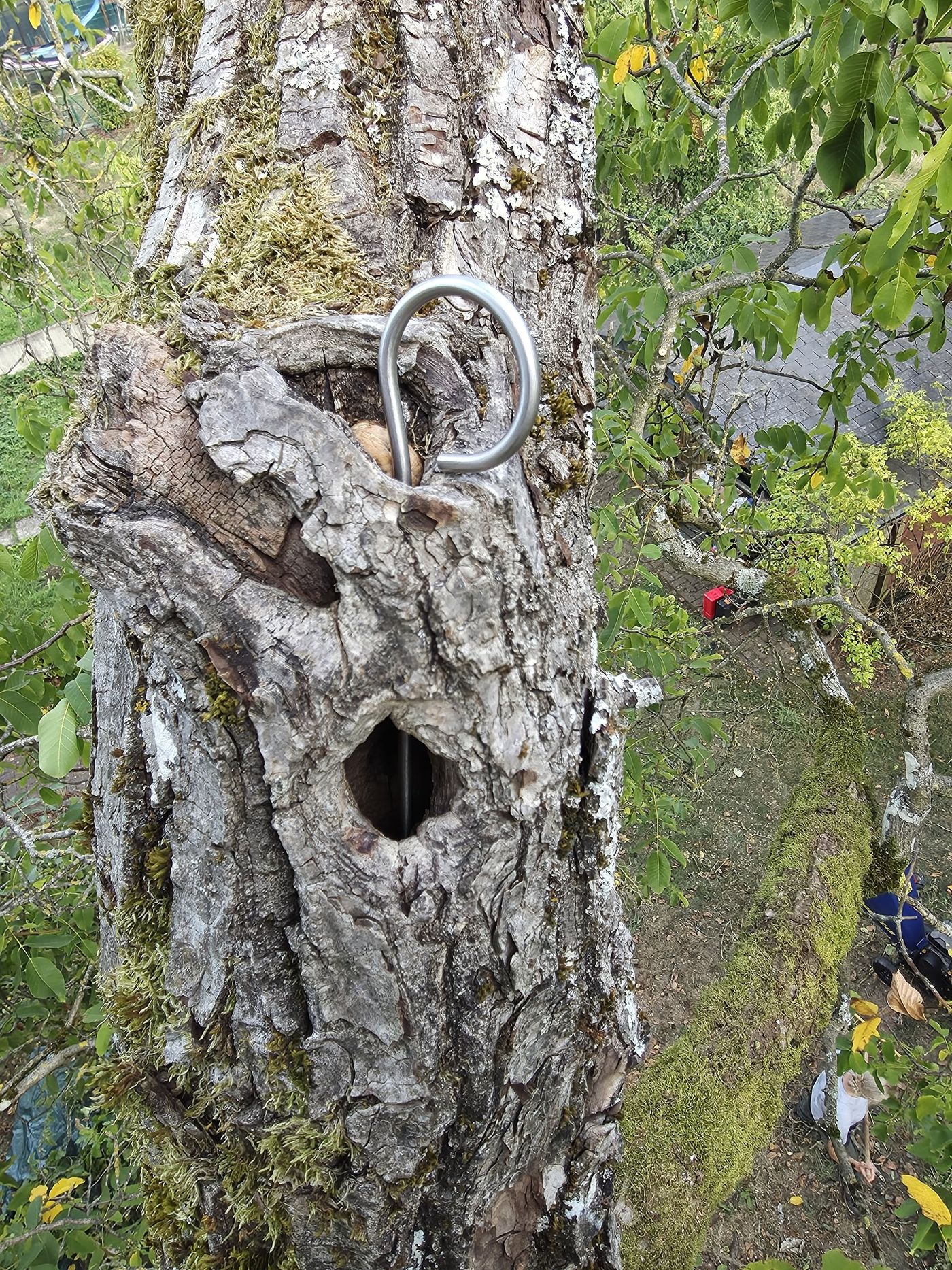
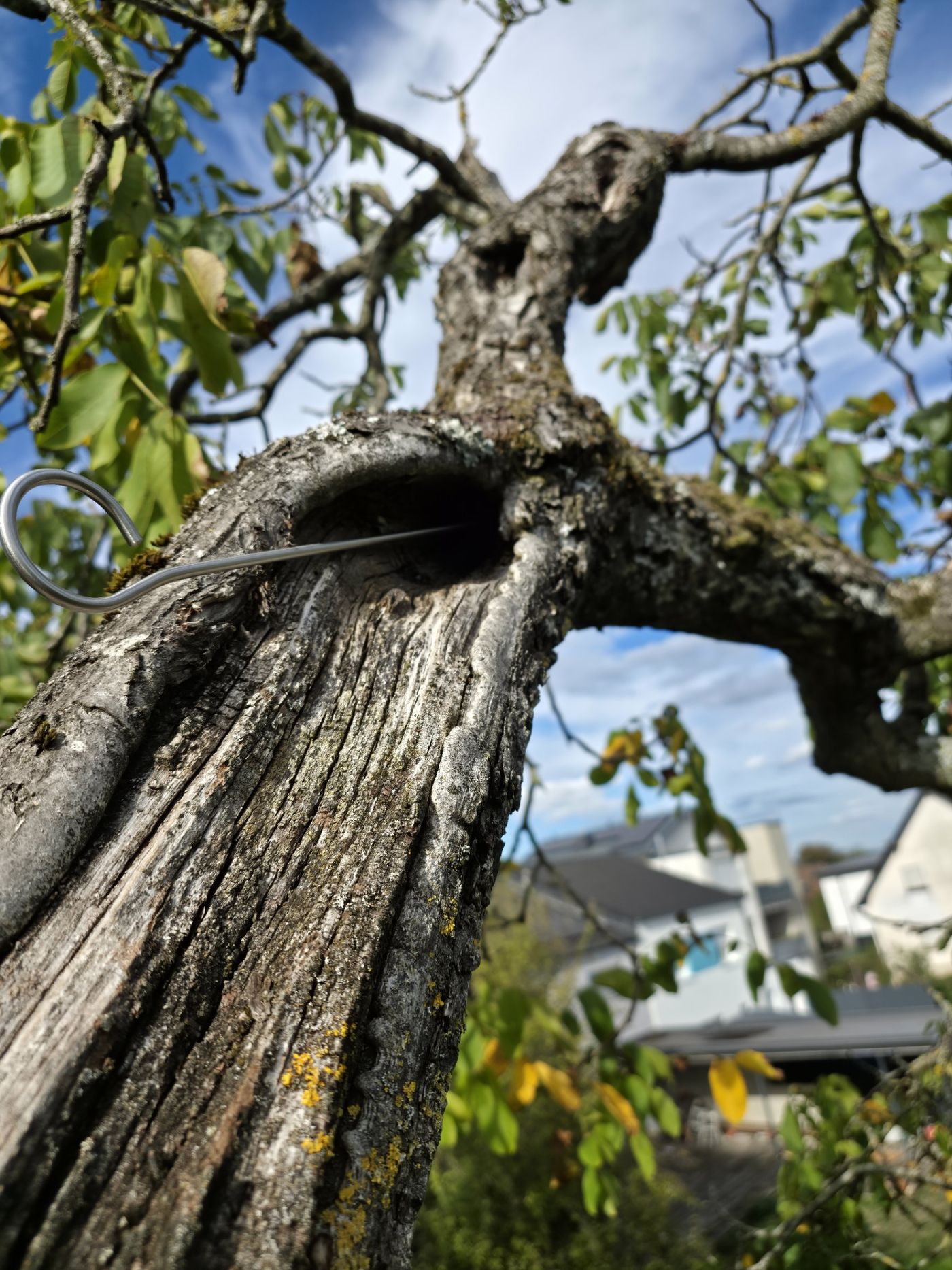
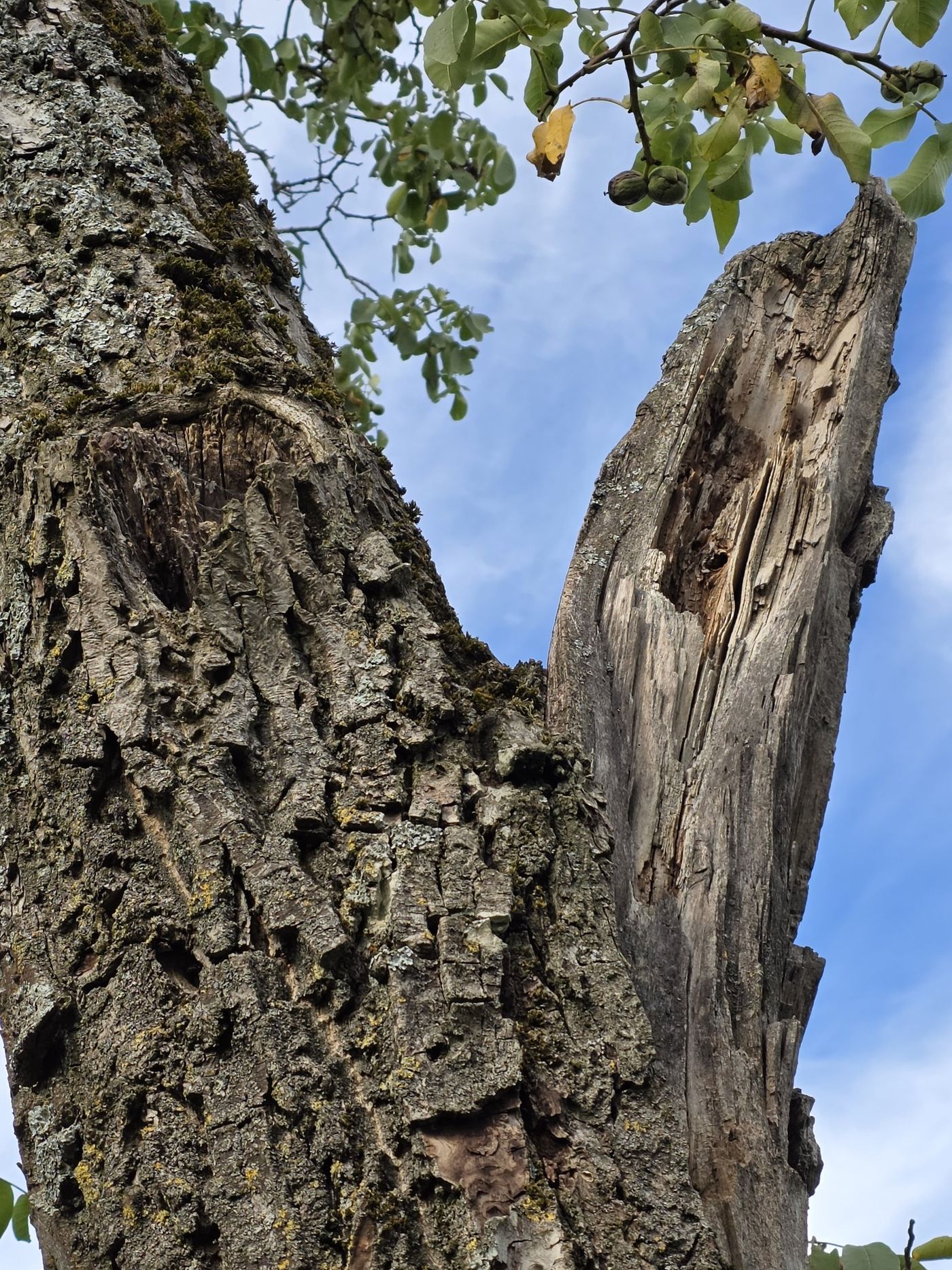
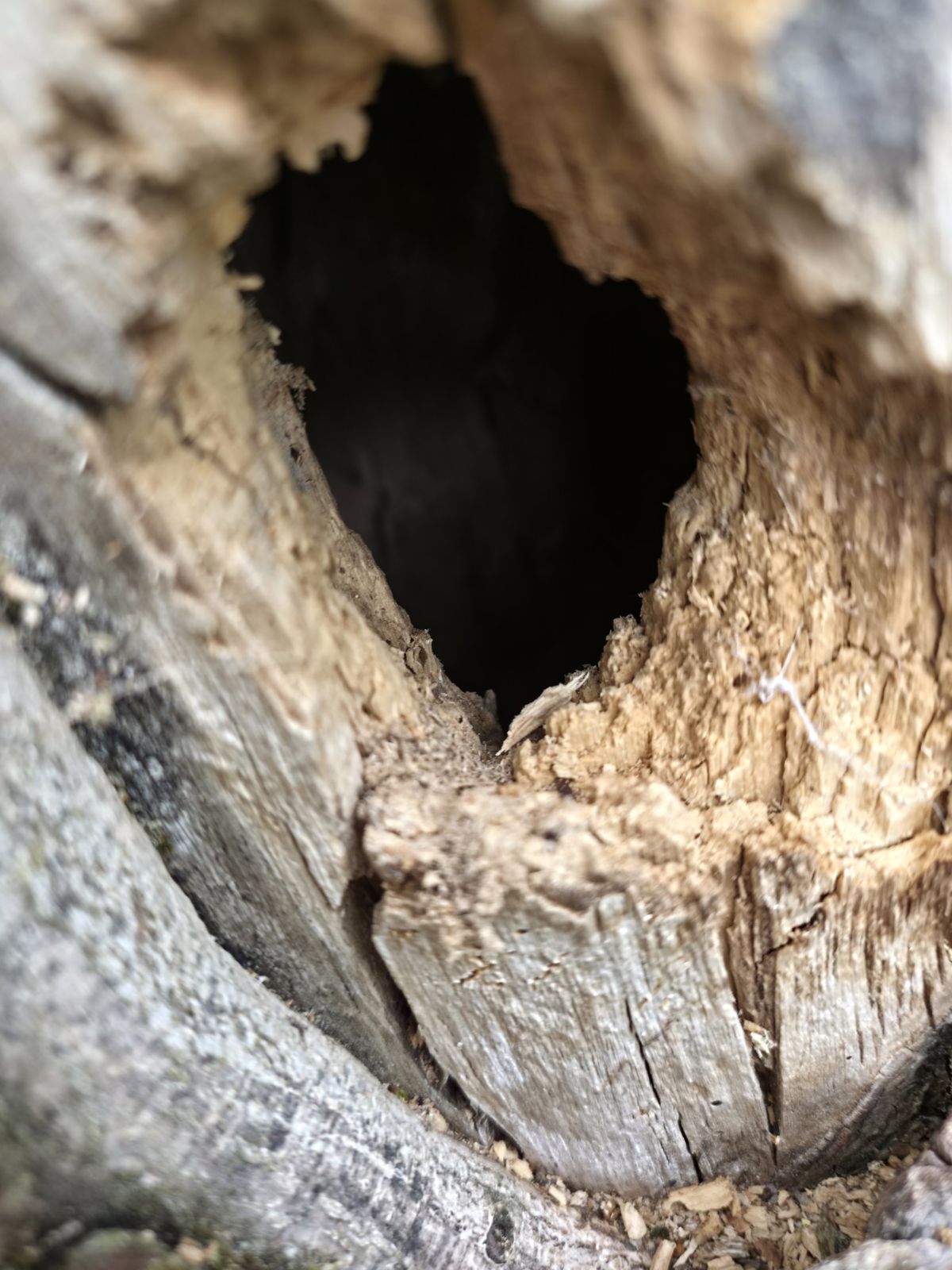
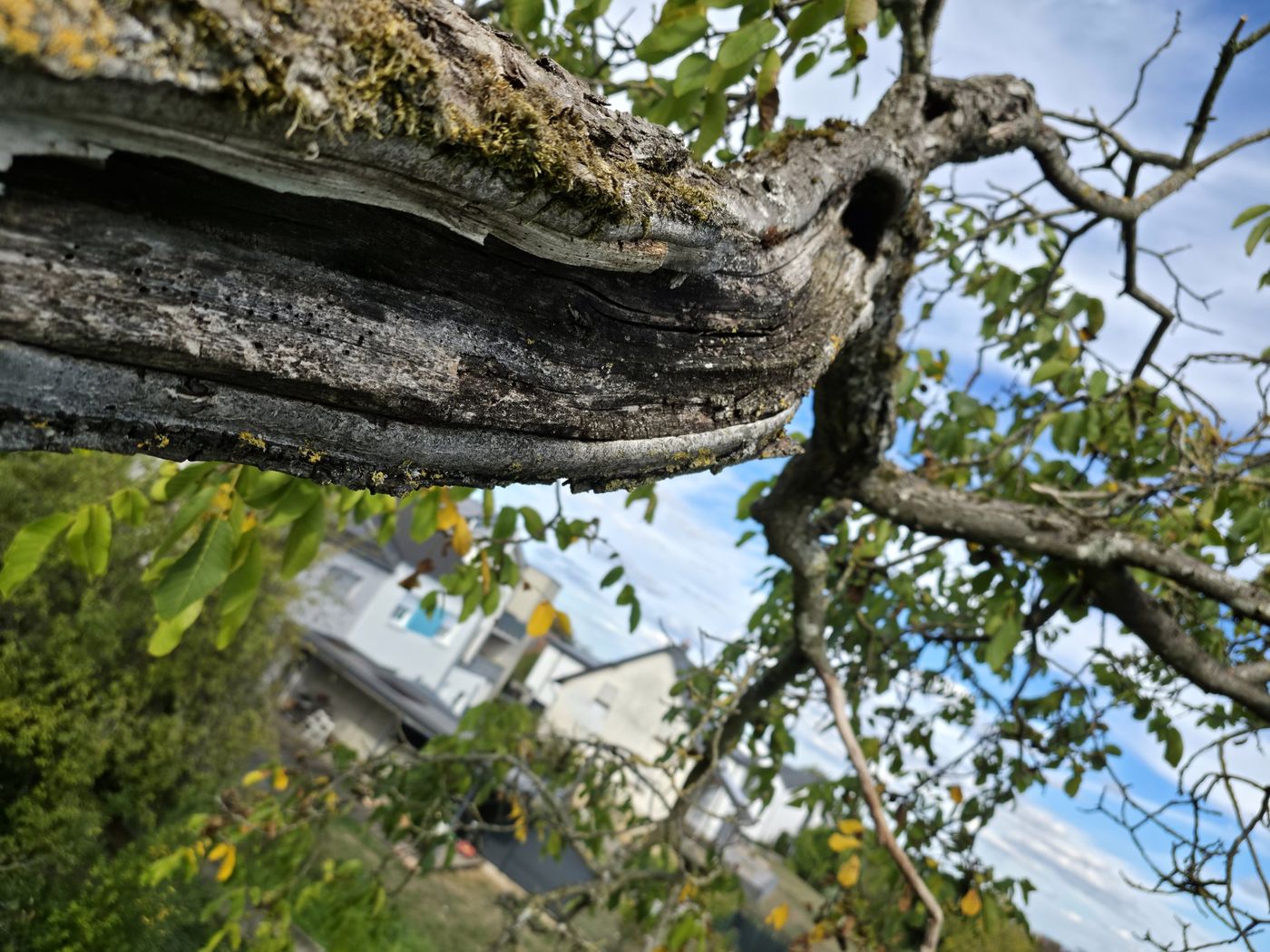
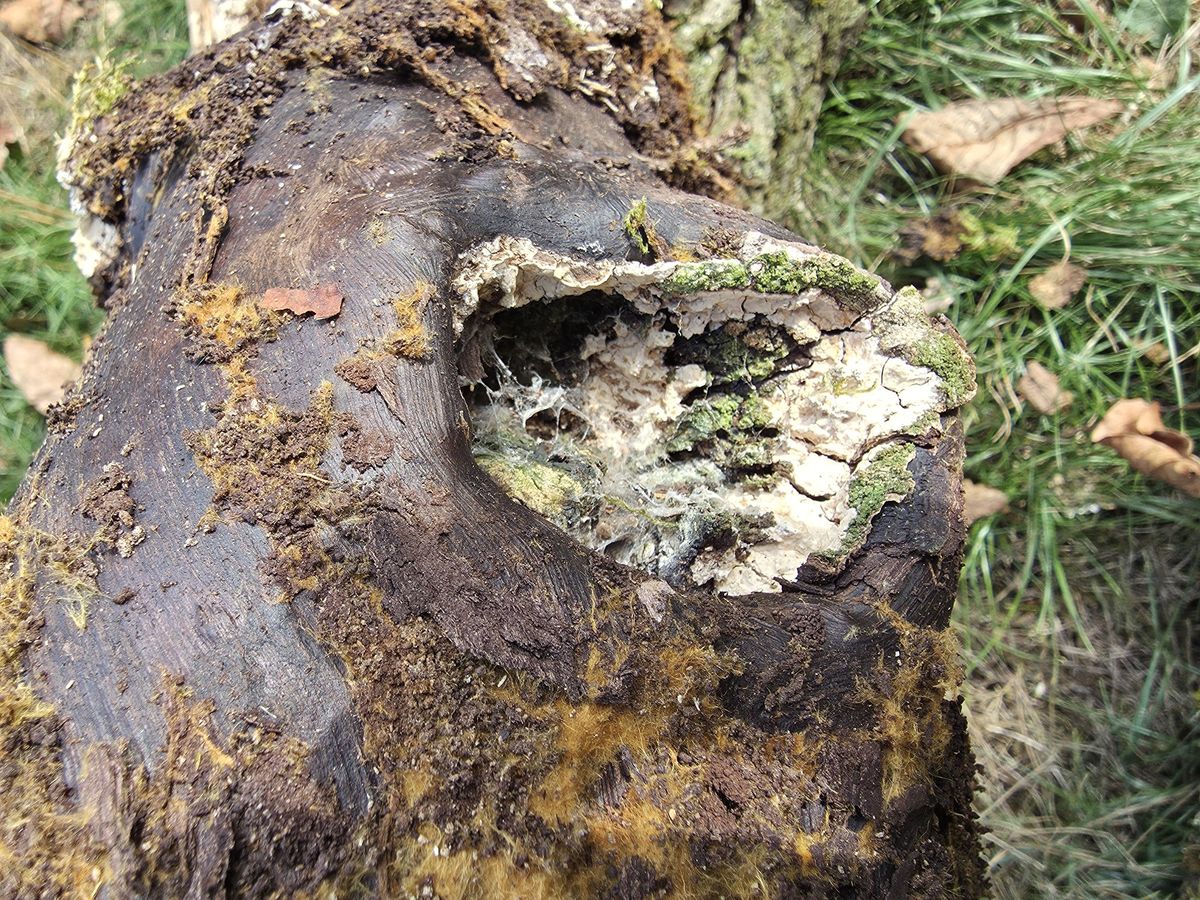
Photos: condition after years of gentle care.
Tree B showed where the limit of cautious pruning lies: if the problem sits in the trunk, a light cut changes nothing about what loads the trunk. The leverage stays, the weight stays, the fungus keeps working. On tree A the weight was taken out – that was radical, but it gave the trunk the calm to rebuild, and the tree took the chance.
That doesn't mean hard reduction is the answer for every tree – on the contrary. It only works when three things come together: a species that resprouts vigorously and closes wounds fast (walnut, lime, willow, plane – not birch or beech), an old tree with enough reserves, and follow-up care that turns the regrowth back into a crown. If one of them is missing, it isn't tree care – it's topping.