
Whoever owns a tree is liable for it
Safety, in the sense of the FLL tree inspection guidelines, means: a tree may not pose a foreseeable, concrete danger, either as a whole or in parts – stability, resistance to breakage and clearance over paths and roads. The owner is responsible for this condition. A regular, documented inspection by a qualified person is the proof that this duty of care has been met.
How a tree inspection works
- Baseline survey
- Every tree is recorded once: location, species, height, stem girth, development phase, condition. From this follows the inspection interval. For municipalities and larger grounds as a tree inventory, for private trees on a simple form.
- Regular inspection
- A qualified visual assessment from the ground – each tree individually, from all sides, covering crown, stem, stem base, root flare and surroundings. Where needed, with binoculars, sounding mallet and probe. This is the inspection the law requires, and it is sufficient for the vast majority of trees.
- Additional inspection
- Outside the interval after storms, freezing rain, snow load, accidents, construction work or excavation in the root zone.
- Detailed investigation
- Only if doubts about stability or breakage remain after the inspection: a detailed investigation with resistance drilling or sonic tomography. For this I currently bring in specialised colleagues – and am building up this service myself.
- Outcome
- No action needed, tree care to the ZTV standard, detailed investigation or felling – each with an urgency (immediate, 6 weeks, 6 months, until the next inspection) and a newly set inspection interval.
How often must a tree be inspected?
Not rigidly, but depending on the tree and the site. The FLL guidelines set these reference intervals:
| Condition of the tree | Mature phase low safety expectation | Mature phase high safety expectation | Veteran phase low | Veteran phase high |
|---|---|---|---|---|
| healthy, slightly damaged | every 3 years | every 2 years | every 2 years | yearly |
| more severely damaged | yearly | |||
High safety expectation: roads, paths, squares, playgrounds, schools, busy parks. Low: little-used paths and green spaces. Young trees (up to about 15 years after planting) need no separate regular inspection if they receive proper formative care. Within three inspections the tree should be seen once in leaf and once bare. Source: FLL-Baumkontrollrichtlinien 2020, tab. 1.
Without interfering with the tree
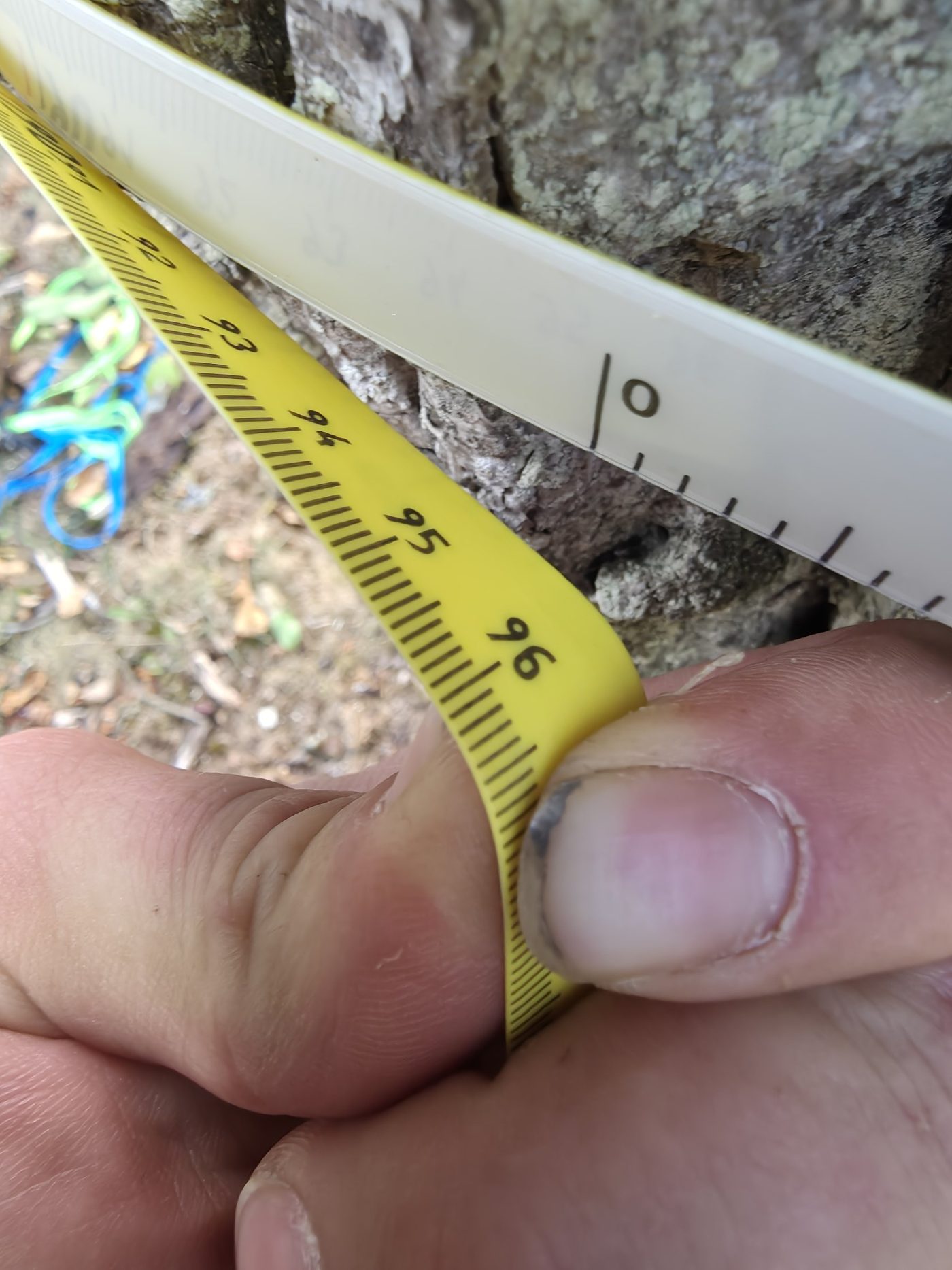
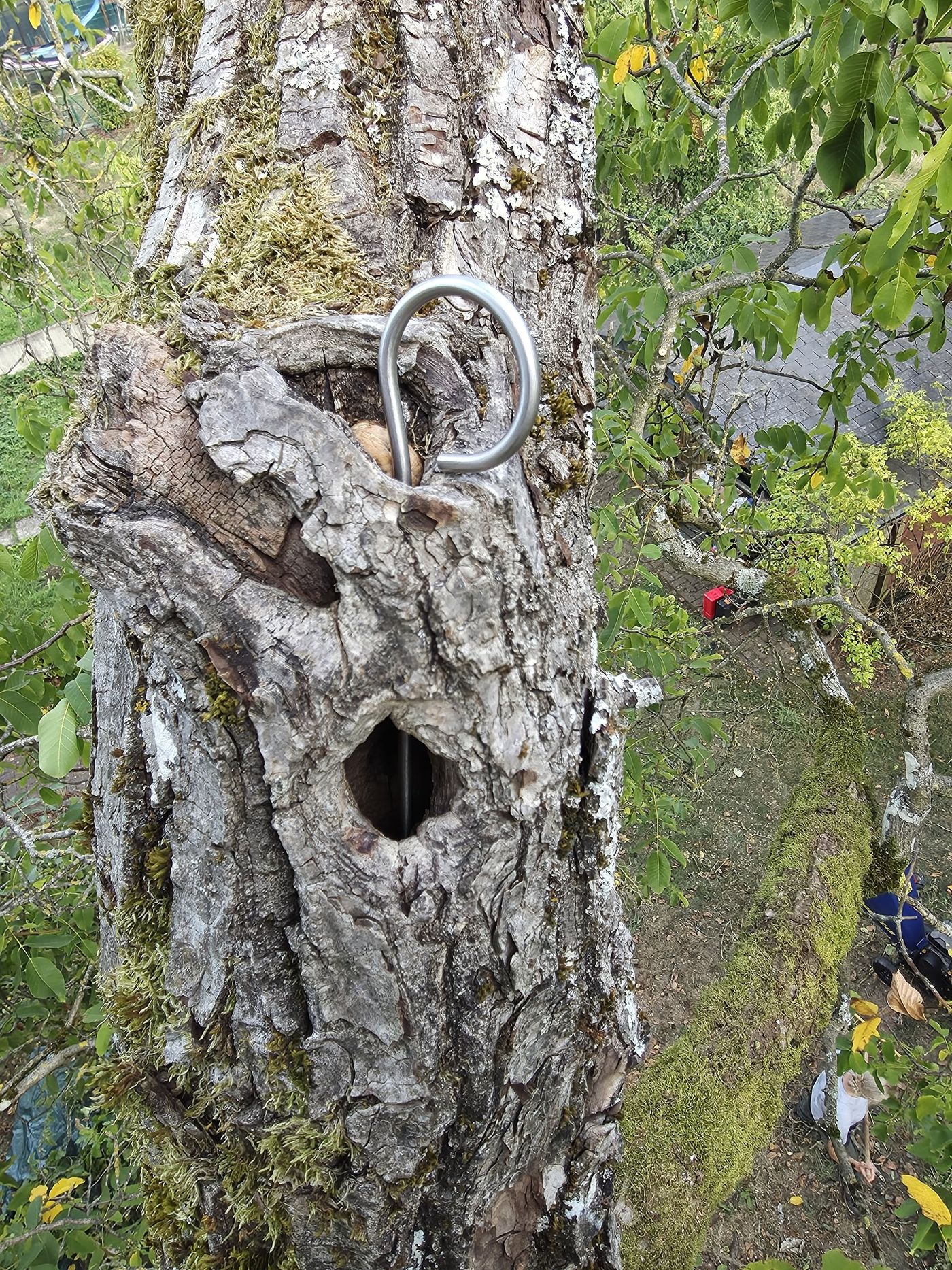
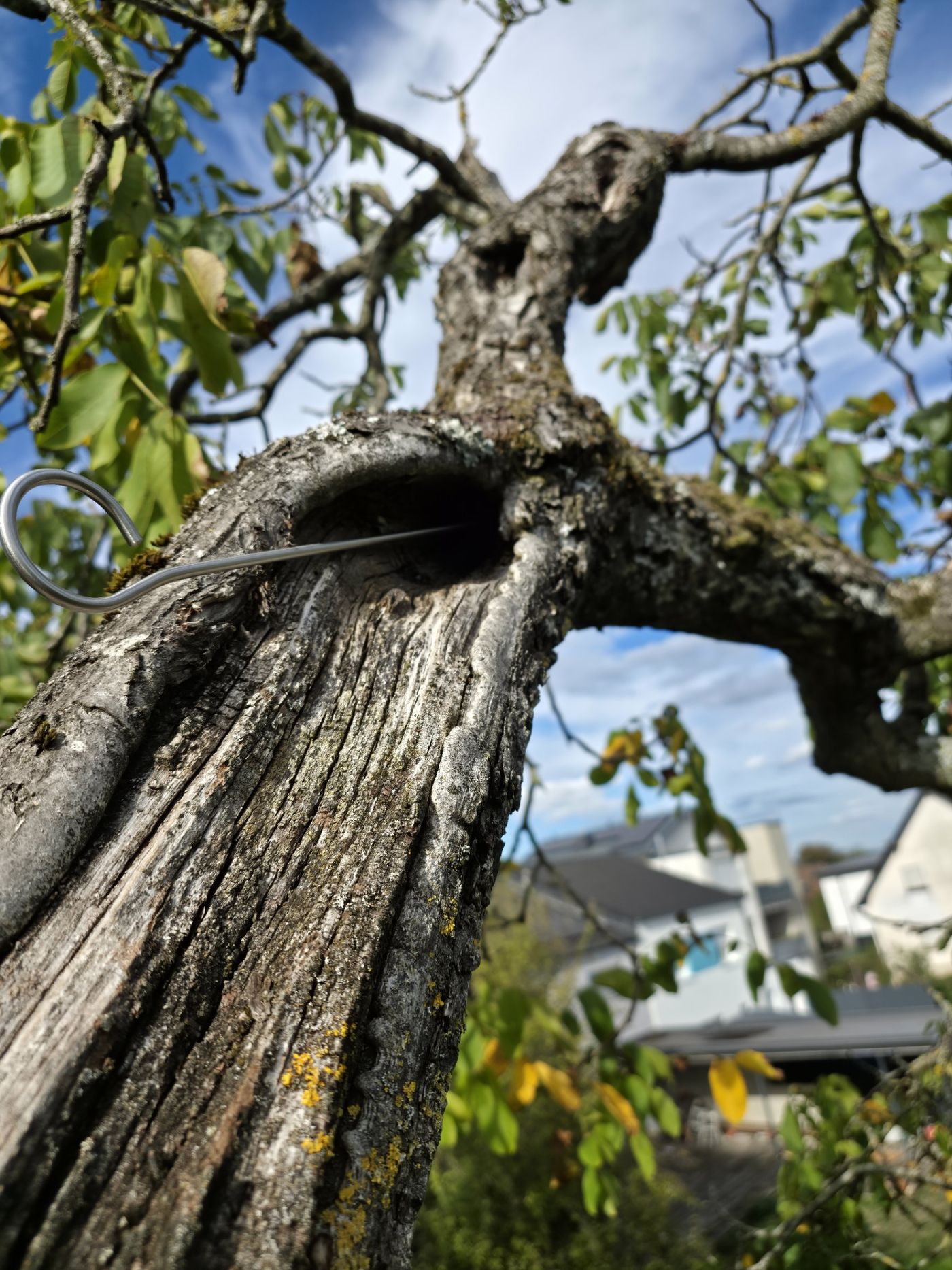
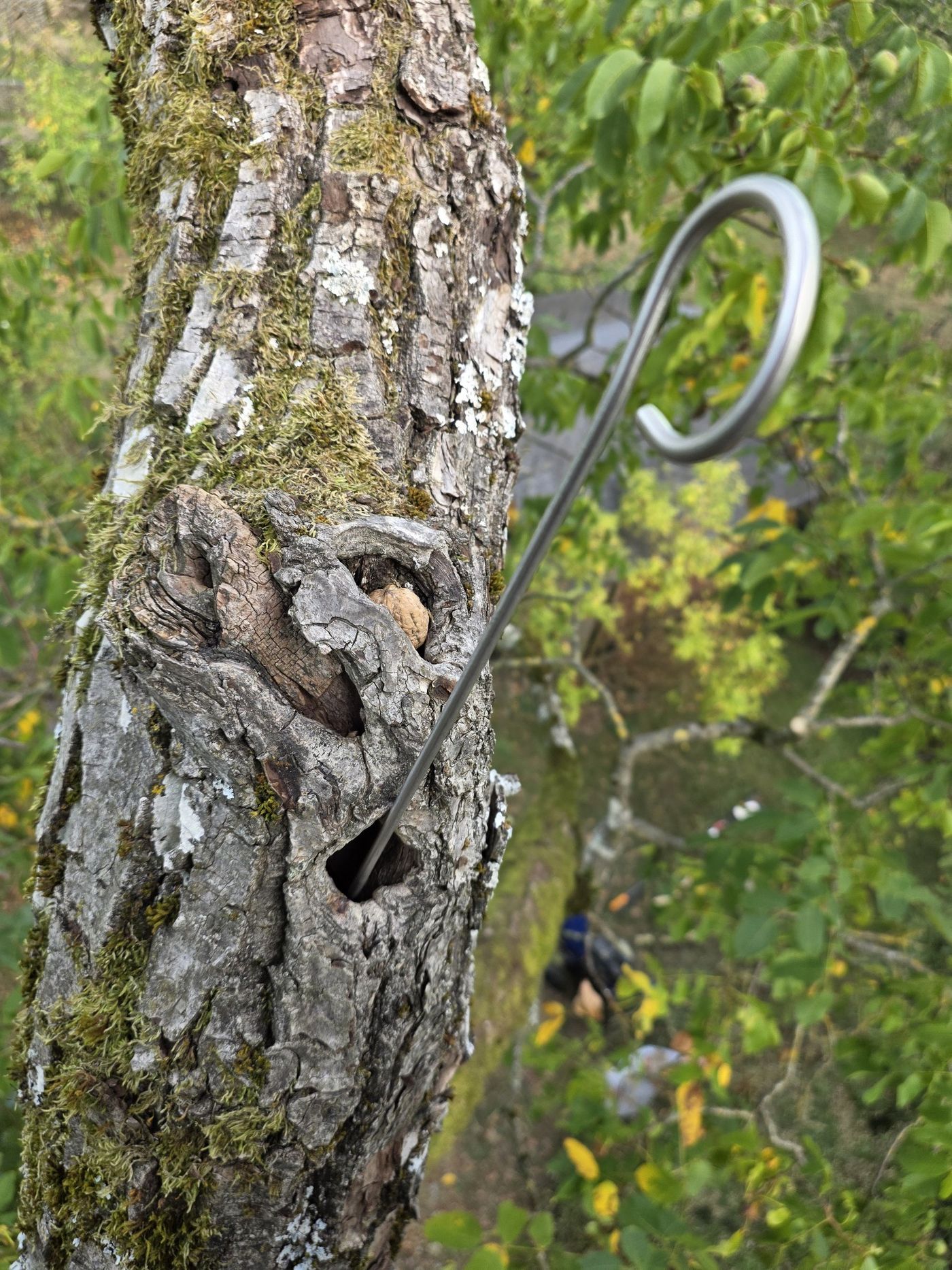
The regular inspection is a visual inspection following the VTA method (Visual Tree Assessment): the tree is assessed from the outside, as a whole and in relation to its site. The only tools I use are the sounding test with a mallet and probing with a probe – nothing is drilled, nothing damaged. Only if doubts remain afterwards is a detailed investigation with measuring equipment indicated.
The assessment doesn't happen from the car park
On site I record the tree and its findings. The final assessment usually takes shape at the desk – with the specialist literature, knowledge of the species and time. Because the species matters: a Norway maple, a silver maple and a sycamore differ in wood strength, compartmentalisation and life expectancy as much as birch, lime and oak – even though all three are called "maple". And like those, they range from the pioneer strategy to the climax tree: birch is a pioneer that grows fast, ages early and barely compartmentalises damage; oak is a climax tree that grows slowly, lives for centuries and walls off decay for a long time; lime sits in between – soft, not very dense wood, but excellent wound closure, which is why it too grows very old. A finding that is harmless in one species can be decisive in another. Which fungus becomes a problem on which species and how fast, whether compensatory growth will absorb the damage, how much residual wall still carries at this wood density – I check all this before I sign a recommendation. That's why you usually receive the report a few days after the visit – but a reliable one.
What a tree inspection delivers – and what it doesn't
- Vitality is not safety. A vigorous tree can be at risk of breaking; a safe tree may have sparse foliage. The two are assessed separately.
- Age alone is no reason to fell – but a reason to look closer. That a tree is old doesn't automatically make it dangerous; a pedunculate oak can stand safely for centuries with cavities. But under the FLL, old trees with damage belong in the shortest inspection interval: yearly, or more often where safety expectations are high. Not felling, but keeping an eye on – that's the difference.
- Fungus does not mean felling. Wood decay by fungi usually takes years to decades; the tree builds compensatory wood at the same time. What matters are the species, the location and the progress of the infection, not the fruiting body as such.
- "Imminent danger" is the exception. It must be justified with facts about the specific tree, not with assumptions. That is exactly what an FLL inspection report provides – also towards the forester during the protection period.
Documentation
Every inspection is recorded: location, date, tree, findings, measures, urgency, next interval, signature. With photos, on request as a digital inventory. The records are kept so that, in a dispute, they serve as proof of the fulfilled duty of care – and in case of damage I document on site, secure evidence and record what was visible from the outside beforehand.