As little as possible, as much as necessary
Tree care to the ZTV standard means: every cut has a reason, and the tree can cope with it. No stubs, no topping without a plan, no crowns that look swept clean after pruning. I work in the crown with rope climbing – where the tree needs it and where a platform can't reach.
- Crown maintenance
- Removing dead, dying, broken and rubbing branches and preventing structural defects – mostly in the fine and small branches. The standard measure for garden, avenue and park trees: it keeps the tree safe without changing the crown.
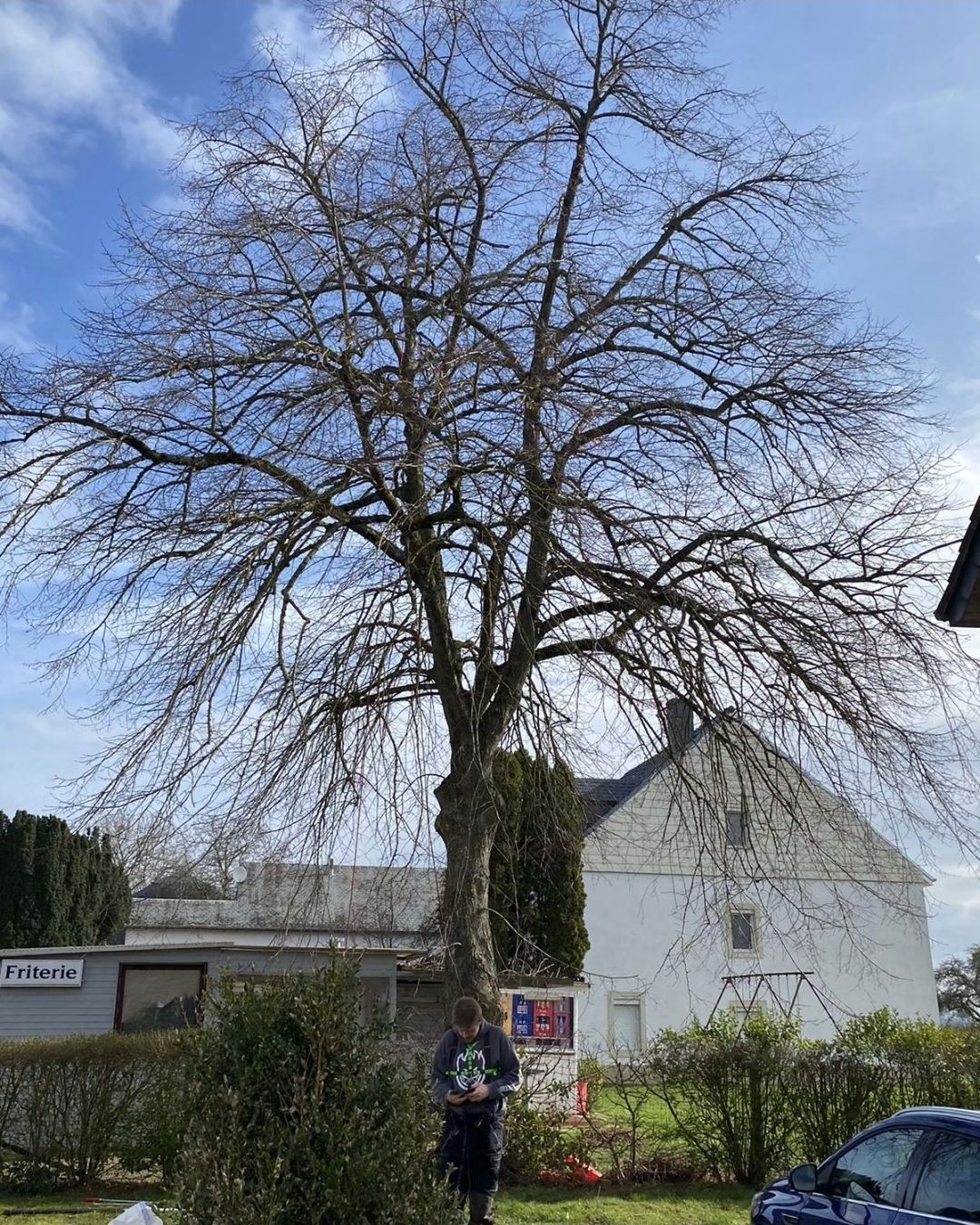 Before
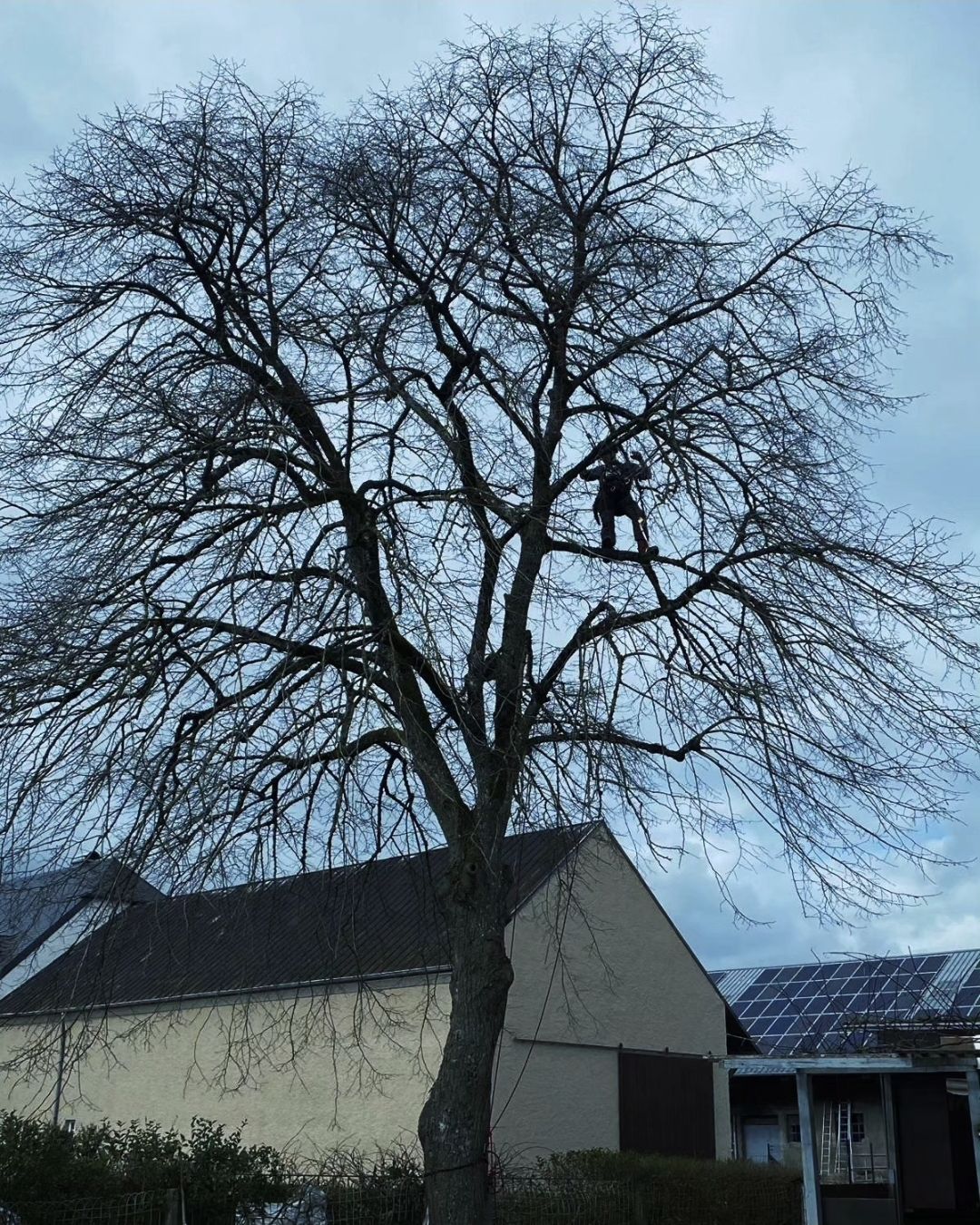 On the rope in the crown
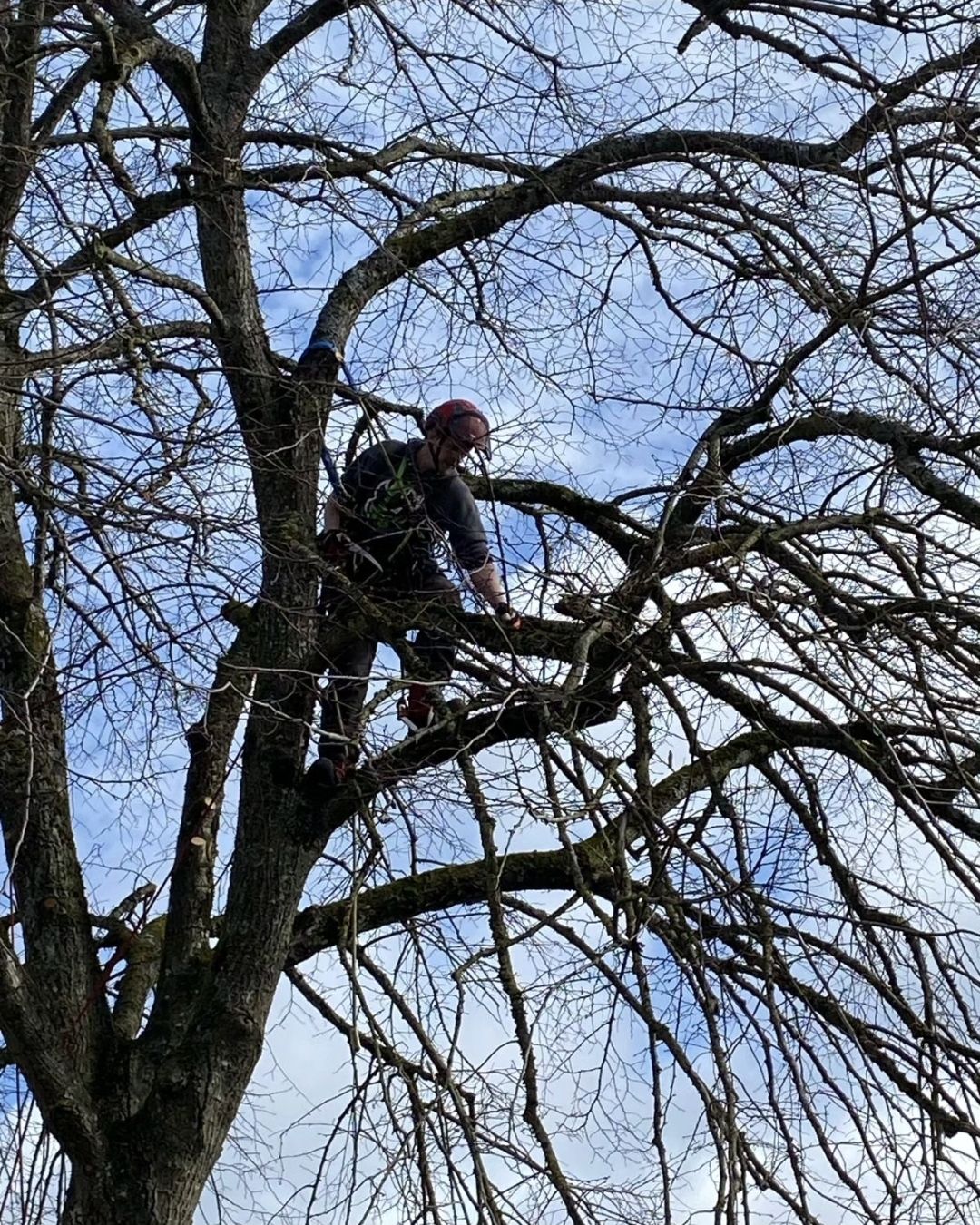 Branch by branch
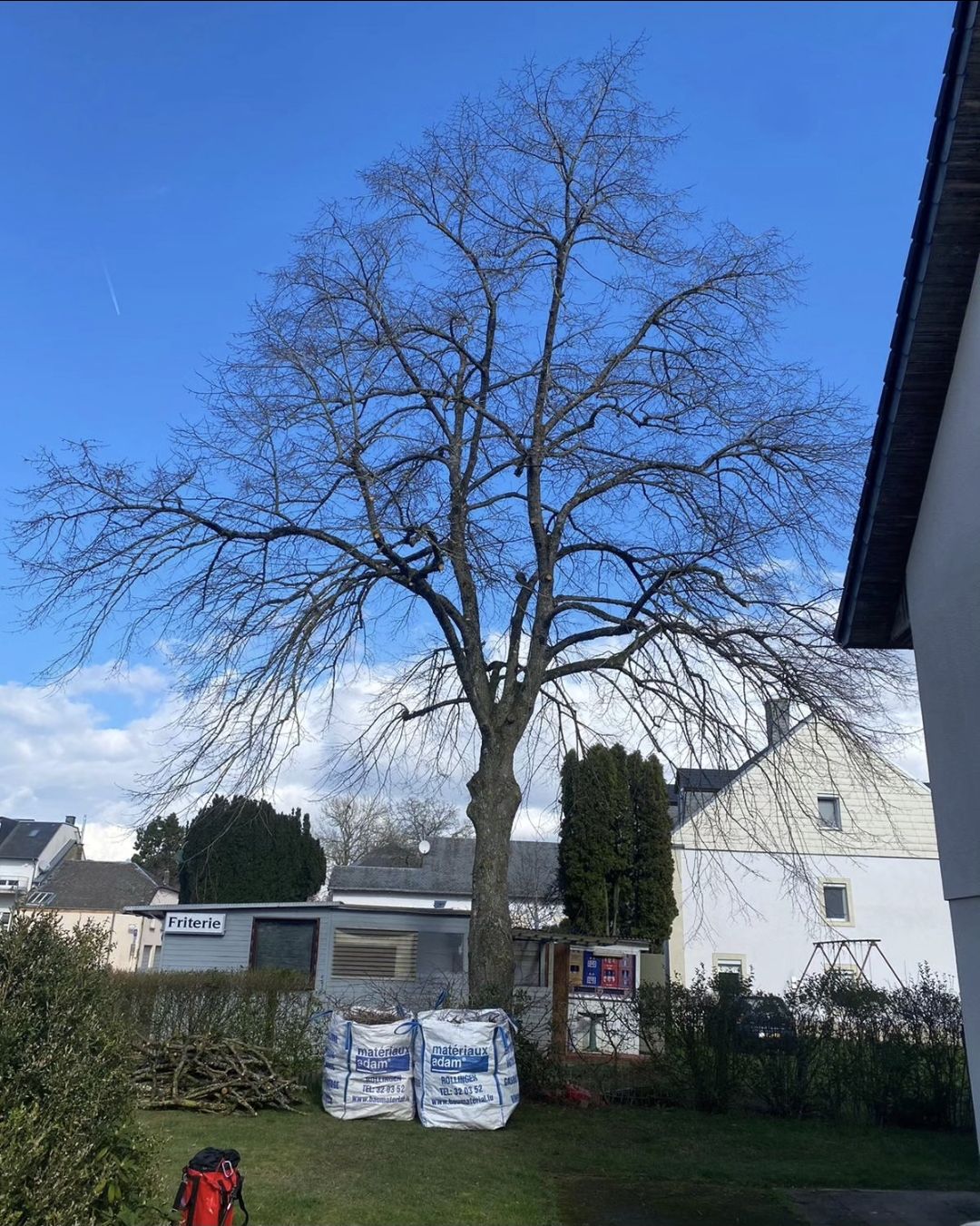 After
- Deadwood removal
- Taking out dead branches above the safety-relevant diameter – as a stand-alone measure when nothing else needs doing on the tree.
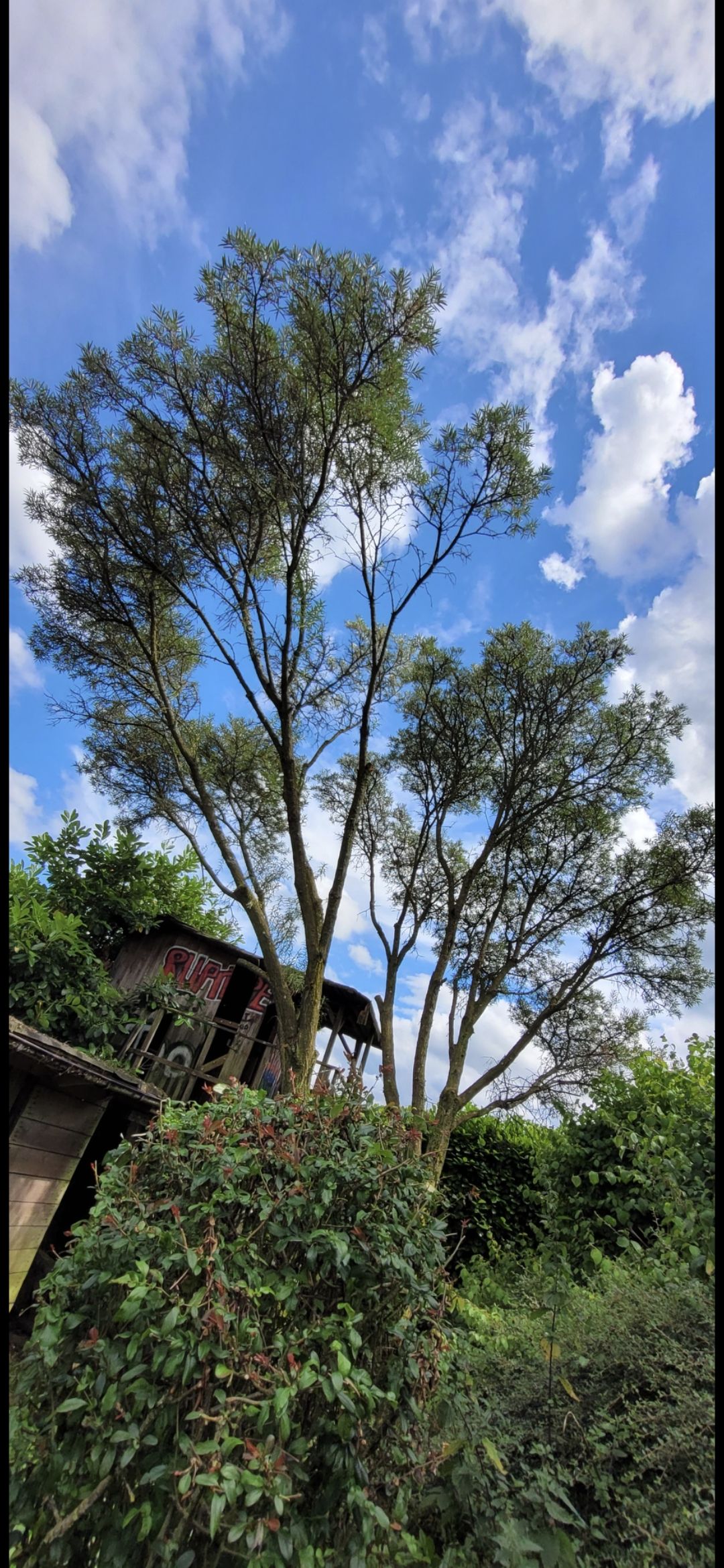
- Crown reduction
- Reducing the crown by cutting back to a lateral that takes over the role of the shortened branch. The tree keeps its natural shape and regrowth at the cut stays low. Indicated for trees that have outgrown their site, after being exposed, or for structural reasons.
- Clearance pruning
- Clearing roads, paths, buildings and lines to the required clearance profile – for municipalities, homeowners and businesses.
- Retrenchment pruning
- Strong reduction of the crown of a badly damaged tree – with advanced decay and little residual wall – to restore safety or for species protection, regardless of the tree's shape. The alternative to felling when the tree should remain as a feature or habitat. The idea behind it: weight and leverage come out, the tree settles down, and the residual wall can rebuild itself through compensatory growth instead of breaking out year after year. This only works with species that resprout strongly and close wounds fast – walnut, lime, willow, plane – not with birch or beech, and only on old trees with enough reserves. Always with a care plan: follow-up on the regrowth after 3, 5 and 7 years. Case study: two walnuts →
- Crown regeneration pruning
- Follow-up care for topped or badly damaged trees – also and especially when others topped them years ago and then left them alone. After losing its crown, a tree produces traumatic regrowth; at topping cuts this turns into poorly attached poles. These are thinned out, taken back to two or three leaders or a third of the shoots, until a new, structurally sound secondary crown stands. Done right, the old topping wounds close over completely.
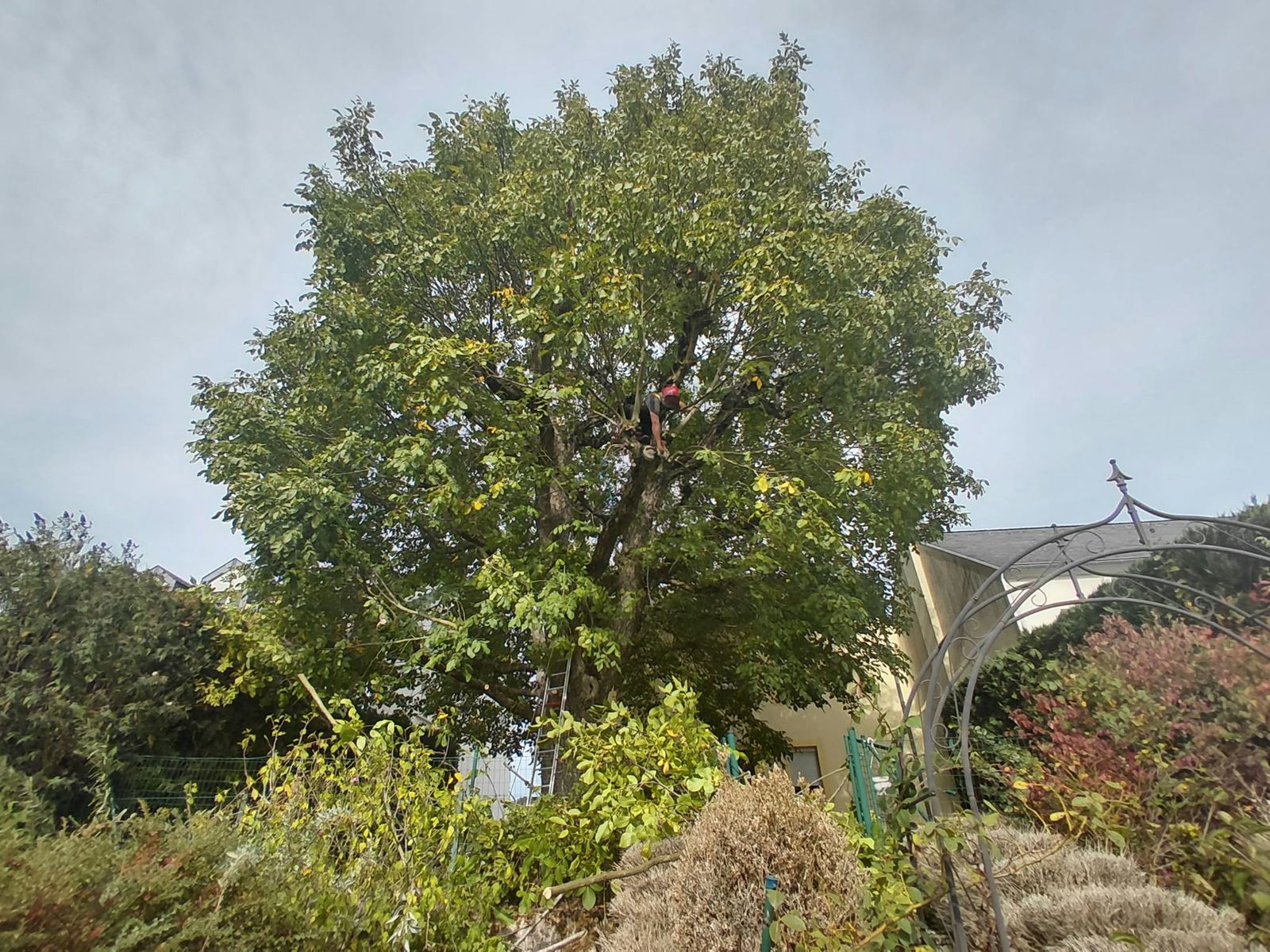 The secondary crown bears again – in full leaf, mid-care
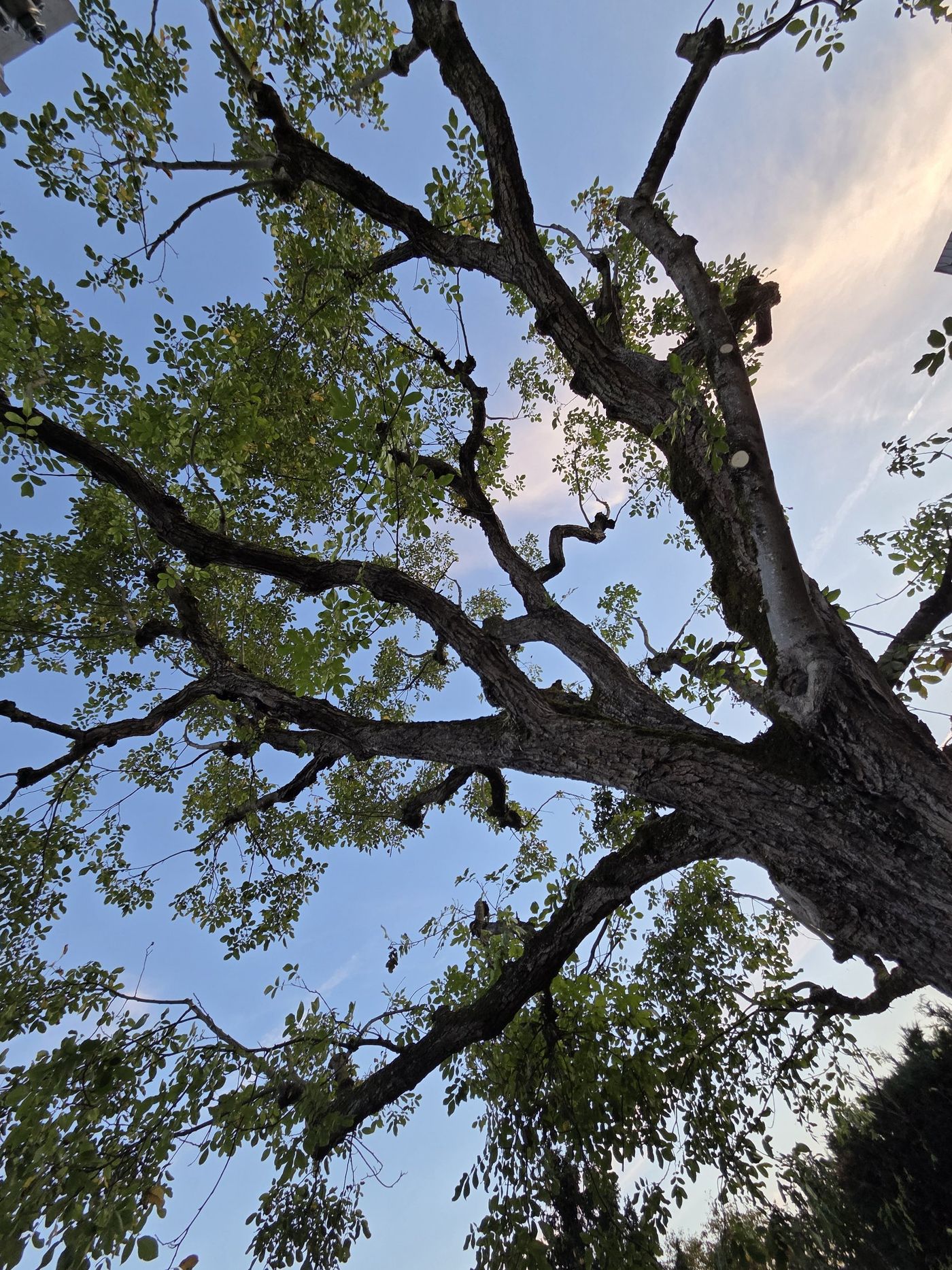 Looking up: the old cuts have closed over
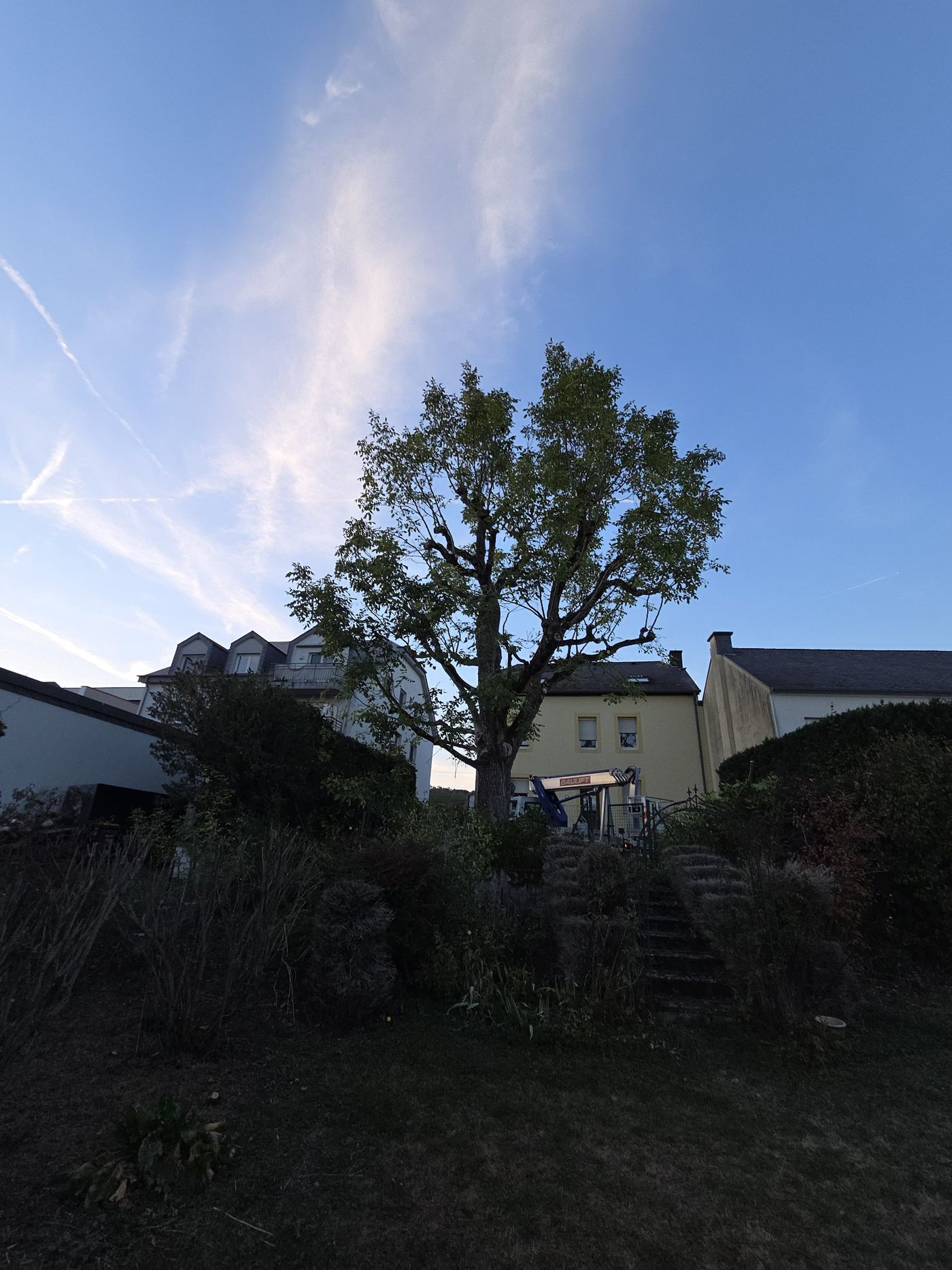 After the care round: compact, sound, healthy
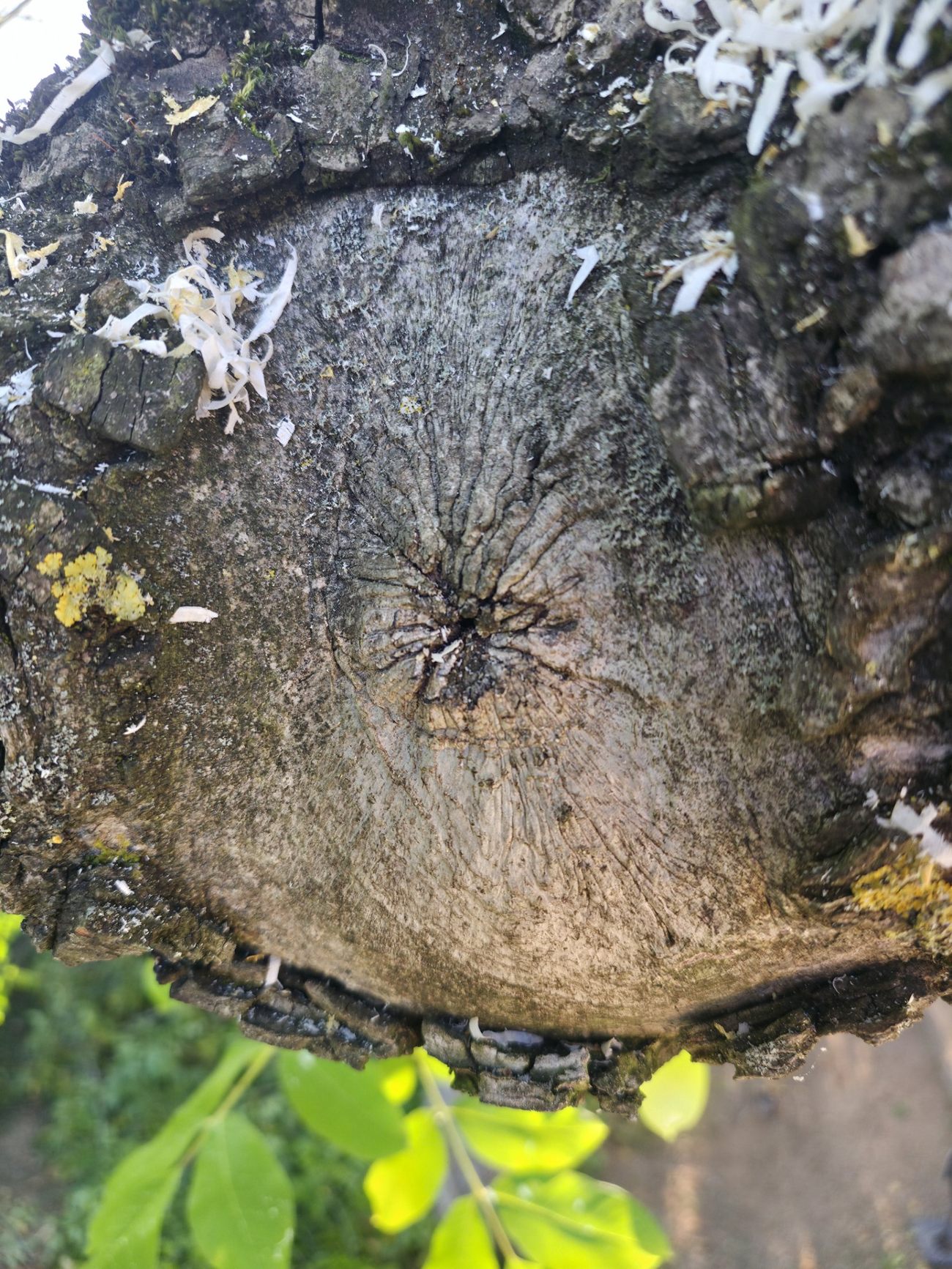 The proof in detail: the old wound has fully closed
- Crown bracing
- Stabilising the crown by connecting branches or crown parts with ropes, slings and shock absorbers – for V-forks with included bark or long limbs at risk of breaking. The alternative to pruning when the crown should be kept.
- Young tree care (formative pruning)
- In the first fifteen or so years after planting: building a stable crown, removing competing shoots, creating clearance over paths and roads by gradually removing the temporary crown. The cheapest pruning in a tree's whole life – skimp here and you pay later with big wounds.
The 30 per cent rule. A tree shouldn't lose more than about 30 per cent of its crown in one intervention – beyond that it lives off its reserves instead of its foliage. If a tree needs to get noticeably smaller, I plan it over two to three years: for example take the height back first and shorten the sides the following year – or the other way round. The tree copes with each step, rebuilds foliage between stages, and the result lasts longer than any radical cut.
Topping is not tree care. The FLL defines topping as the "extensive, tree-destroying removal of the crown without cutting back to laterals" – not a professional measure, not state of the art. Top a tree and you don't get a smaller, safer tree; you get one that answers with dozens of shoots: within a few years more foliage, more deadwood, more risk of breakage, rotting wounds. So the question is never just "when", but "where should the tree go". More on the Pruning Calendar page. Distinct from this is pollarding of willows and limes trained that way from the start – that is good practice.
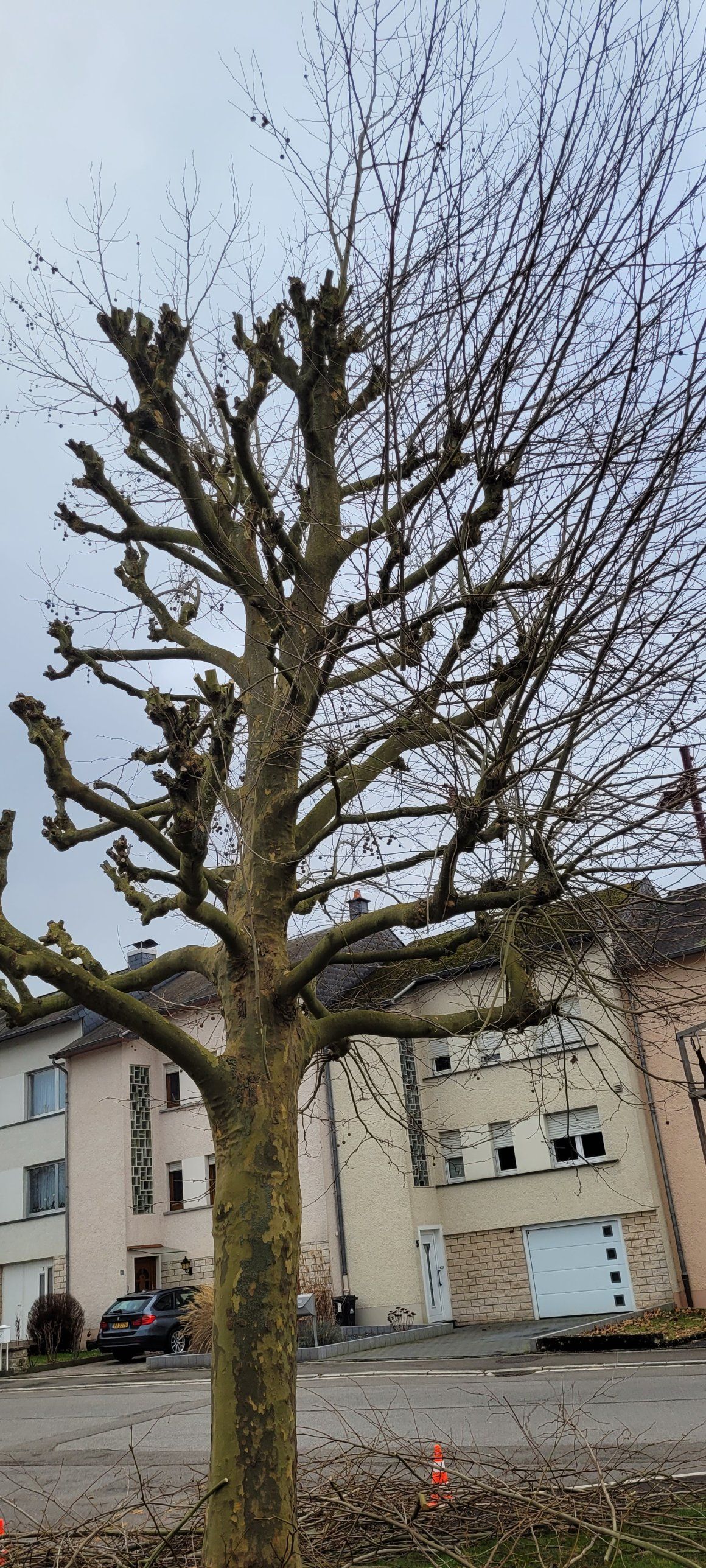 A plane trained as a pollard: it has to be cut back every few years – and exactly this perpetual maintenance is what you sign up for when topping a free-grown tree.
Inspect first, then prune. Before any larger intervention I look at the tree as a tree inspector: fungi, cavities, bark damage, habitat features. What I find goes into the quote – and if a tree shouldn't be pruned, I say that too.