
Every fruit tree has a phase of life – and each needs its own pruning
A young standard needs formation, a bearing tree needs fruiting wood care, an old tree needs relief. Cut the wrong thing at the wrong time and you get water sprouts, canker or a crown that breaks in the next storm. That's why every fruit tree job starts with a look at the whole tree: variety, age, site, vitality, history.
- Planting and planting cut
- Choosing the spot, planting properly with stake and browse protection, a first cut for the right crown structure. On request with old, robust varieties for Luxembourg orchards.
- Formative pruning (young trees)
- Building a stable crown with a central leader and three to four scaffold branches in the first years – the foundation for a long tree life.
- Maintenance pruning and fruiting wood renewal
- Thinning, removing competing shoots and water sprouts, rejuvenating the fruiting wood by rotation: old, exhausted fruiting wood is cut back to young shoots so the tree keeps producing fresh, productive fruiting wood – for regular yields and an airy, healthy crown.
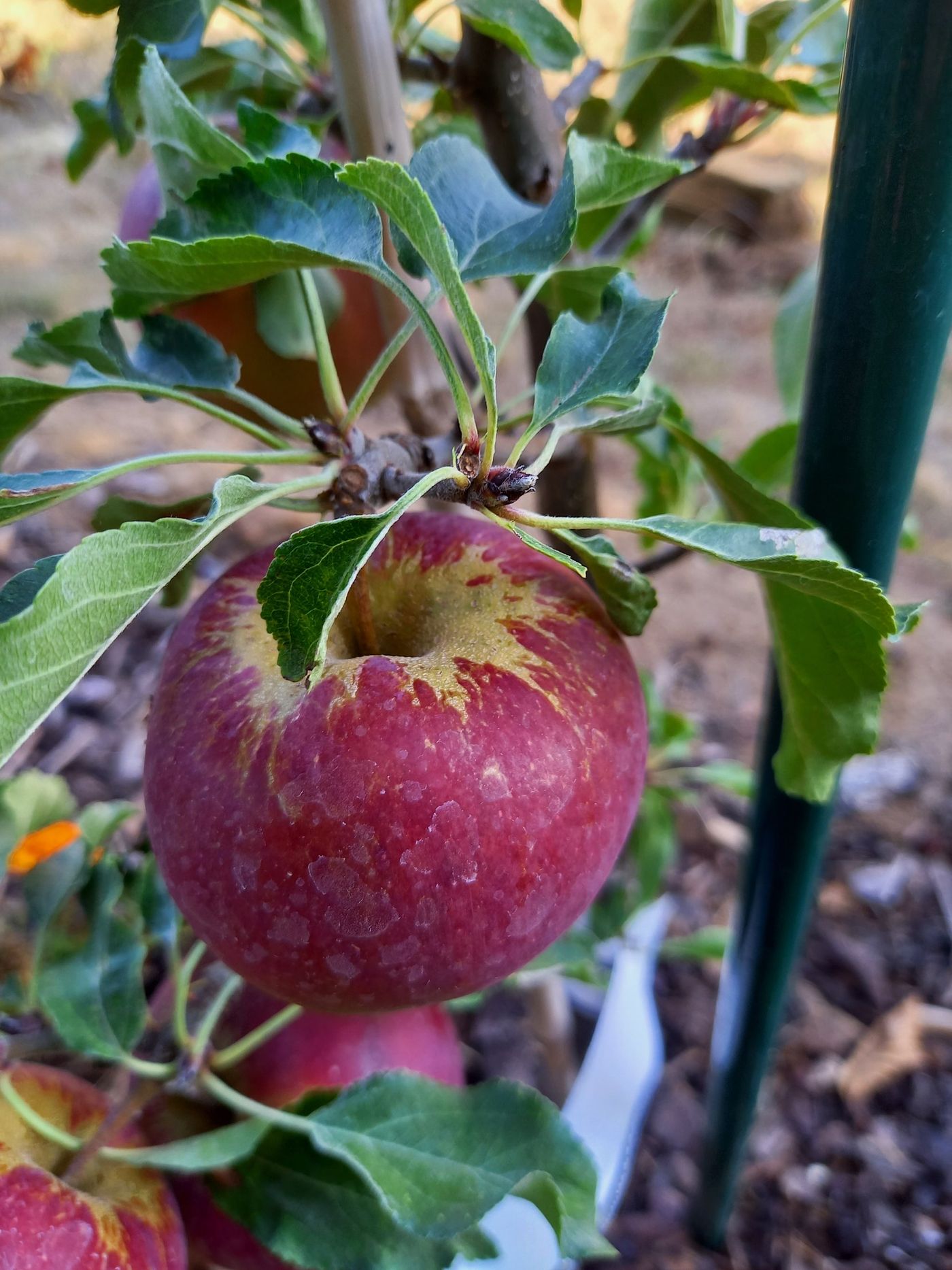 Healthy fruiting wood: plump flower buds
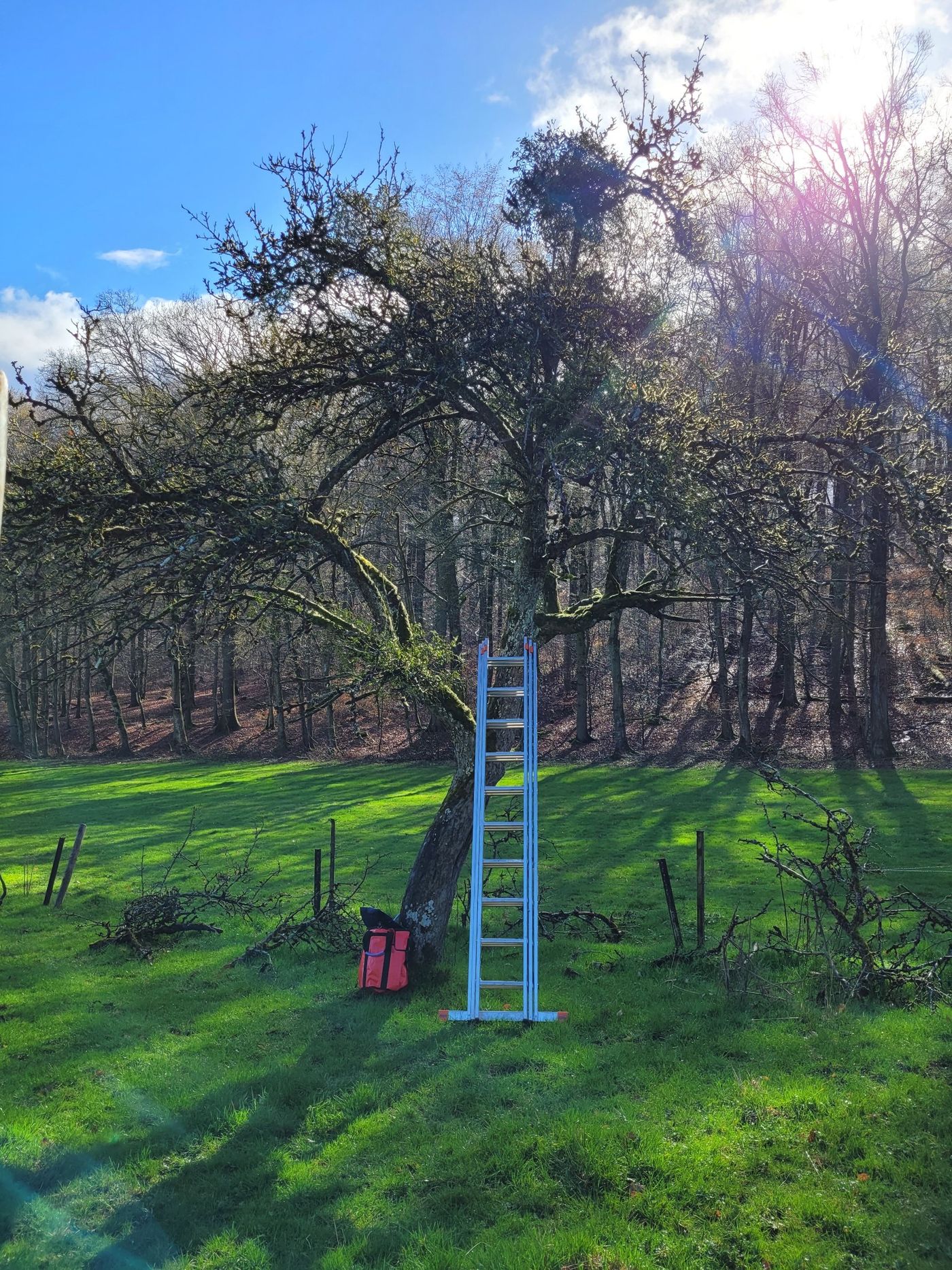
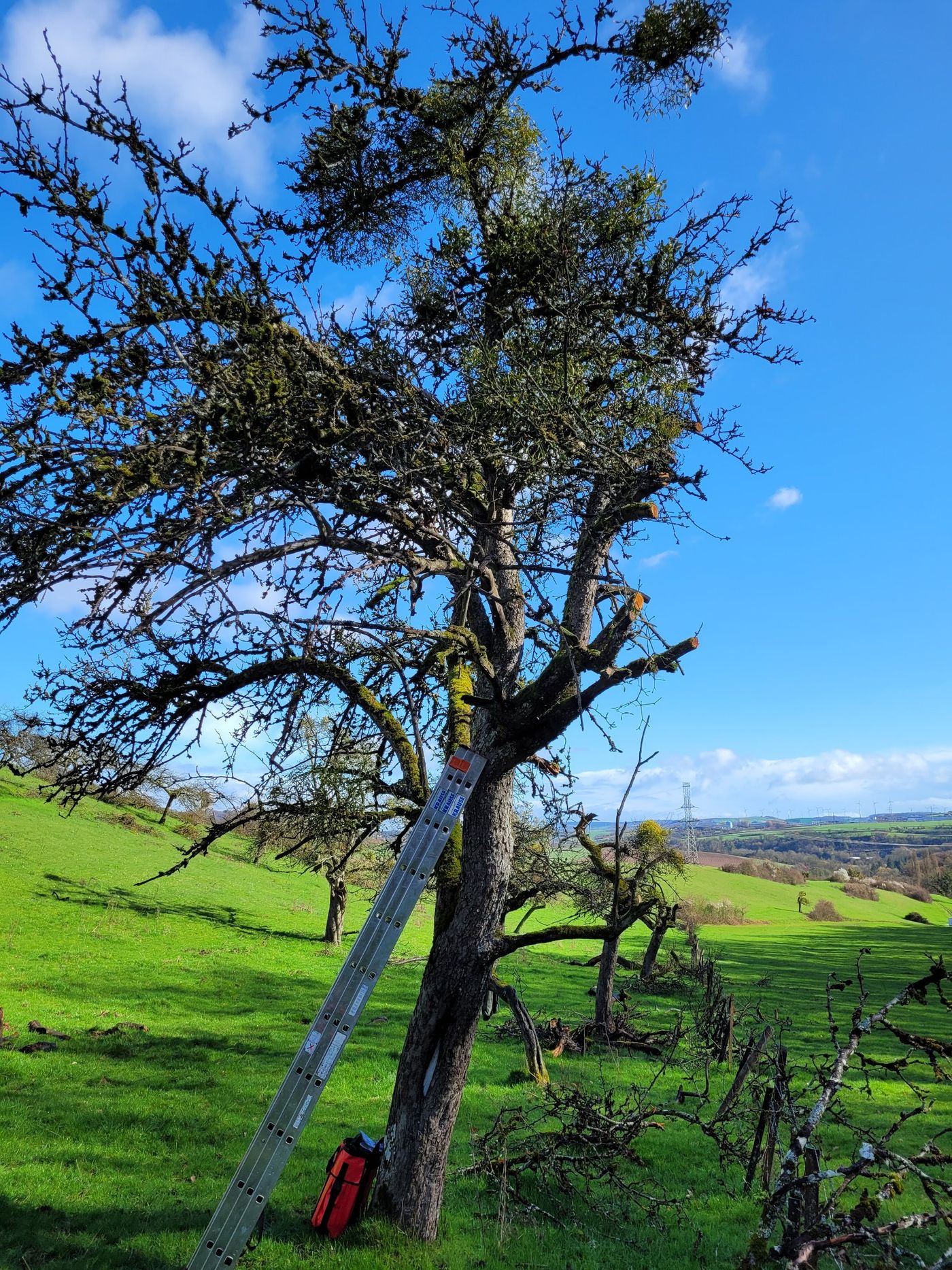
- Restoring old standards
- Careful relief of ageing or long-neglected trees, spread over several years. The goal is preservation, not rejuvenation at any price – an old apple tree is habitat for little owls, bats and wild bees.
- Grafting and variety preservation
- Top-working to the varieties you want; rescuing old local Luxembourg varieties from dying trees by cutting scions in winter and grafting onto new rootstocks – as a standard for the orchard or, on a dwarfing rootstock, as a small tree for the home garden. More on variety preservation →
When do we prune?
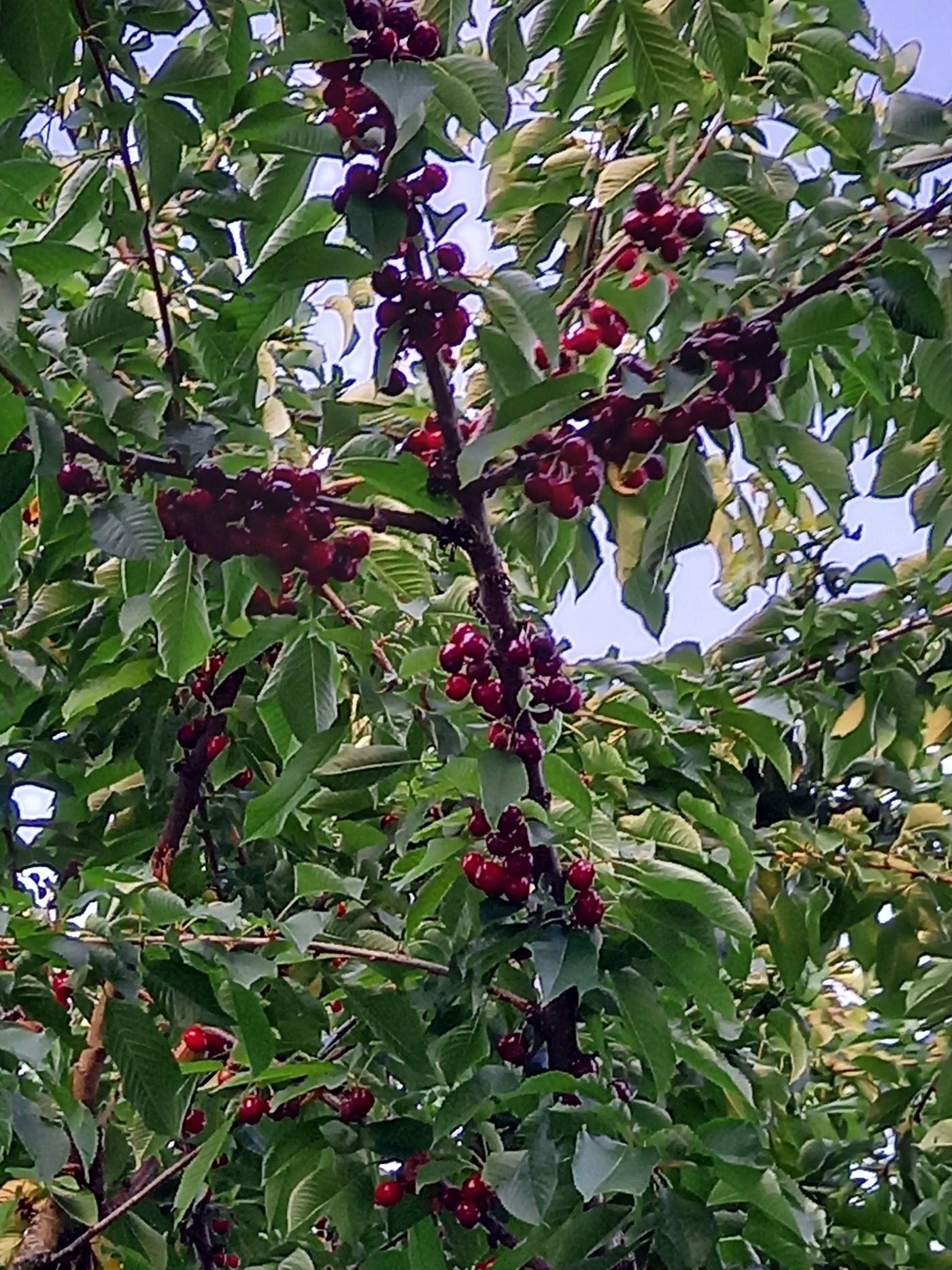
Pome fruit (apple, pear, quince) in winter or late winter; on older, vigorous trees also in summer, to calm the growth. Stone fruit (cherry, plum, mirabelle) after the harvest in summer, so wounds close quickly. Walnut only in late summer. We'll discuss the right moment for your tree during the on-site visit.
Traditional orchards in Luxembourg: many municipalities and the nature parks run support programmes for planting and maintaining standard fruit trees. I'll advise you which ones might suit your meadow.